

If you are renovating for the second time, one of the most valuable things you can bring to the project is what your previous renovation taught you.
After more than 200 London renovations, we have found that clients who have renovated before make better decisions when they look beyond what they liked or disliked last time and consider why certain choices worked, how their lives have changed, where their investment made a lasting difference, and what they need from the renovation process itself.
Your first renovation teaches you a lot.
You learn how many decisions hide behind a seemingly simple room. You discover that the position of a socket can matter more than you ever imagined, and that something you loved in a showroom might not work quite as beautifully once it becomes part of everyday life.
Your second renovation is a chance to understand what your first one taught you about how you actually live, and use that knowledge to create something much more personal.
First, Use What Your Previous Renovation Has Taught You
It is natural to begin with what frustrated you last time. And while past experience will be valuable, it will not give you the whole picture unless you take a closer look at what actually caused the frustrations.
Perhaps you came away thinking you needed more worktop space. But was the kitchen genuinely short of it, or did your appliances permanently occupy the counter space, leaving nowhere practical to conceal them?
Maybe your kitchen always felt crowded. A larger kitchen might sound like the answer, but the real problem could have been an island positioned too close to the cabinetry, an open dishwasher blocking a walkway, or the main cooking route cutting through where everyone naturally gathered.
Even “we need more storage” deserves a closer look. Deep cupboards can provide plenty of capacity on paper while making half their contents difficult to reach. A large pantry in the wrong place can be less useful than smaller storage positioned where you actually prepare food.
Instead of asking only, “What did we dislike?”, go one step further: “What was it about the design that made everyday life harder?”
Your previous home has given you years of evidence about how you cook, move, store things, get ready in the morning and live together. Use that evidence to identify the problem behind the frustration before deciding what the solution should be.
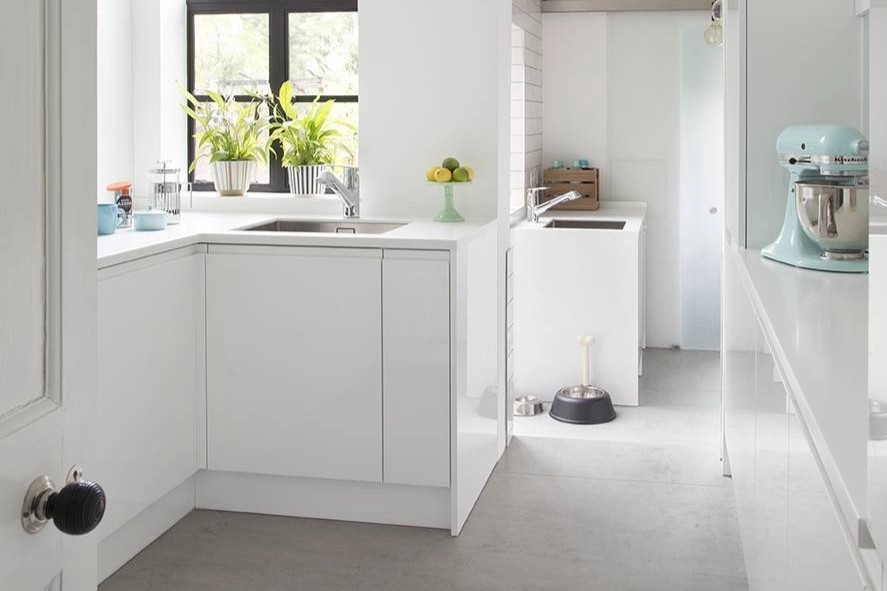 The Hereford Road Kitchen as part of a full Interior Remodelling Project by Amberth
Look Beyond What Went Wrong To Understand Why
One of the biggest changes we see in someone who has renovated before is what they pay attention to. You often become less impressed by features in isolation and more interested in how different decisions work together.
That might mean noticing that the dishwasher is positioned where it can be emptied without interrupting someone cooking, but the principle goes much further than any one detail. Good design considers the relationship between movement, storage, appliances, furniture and the routines that happen around them.
This is often where the lessons from a first renovation become most useful. Instead of simply remembering that something was frustrating, you can ask what caused the frustration in the first place. Was it the position of an appliance, too little clearance, or storage in the wrong place?
Understanding the cause allows the second renovation to solve the underlying problem rather than simply replacing the feature you disliked.
Consider What Has Changed In The Way You Live
In our experience, there is another reason simply repeating a previous renovation with a few improvements rarely works.
You have changed.
Your life may have changed just as much as your ideas about design. That is why your next renovation needs to respond to how you live now, rather than simply improving on what you had before.
Children grow up, and a layout that suited toddlers rarely suits teenagers. Maybe working from home has become part of your week, and a place to break away has become important in a way that was not before.
Perhaps the open-plan space you once dreamed about taught you that sometimes you would quite like to close a door.
A second renovation gives you the chance to stop designing around an idea of how you thought you would live and begin designing around the evidence of how you actually do.
The 2026 UK Houzz & Home Study, based on responses from 1,306 UK homeowners, found that 71% of renovating homeowners planned to remain in their homes for at least another 11 years after their project. This same study found that for 27% of the homeowners, the reason for renovation was to adapt their home for remote working. When you think about a renovation across a decade, different questions start to matter.
Will this layout still work as your family changes?
Will you still appreciate these materials after years of use?
And, perhaps most importantly, does this home support the life you are building?
Pay Attention To The Details That Make The Biggest Difference For You
At our Durlston Road project, a professional couple with three young children were renovating as second-time homebuyers. This home needed to work for the family they had become.
Storage was important, but the answer was not simply to cover every available wall with cupboards.
A concealed breakfast and coffee area allowed everyday appliances to remain readily accessible without leaving the kitchen feeling cluttered. Floor-to-ceiling cabinetry used the available height, while storage on the back of the island kept crockery close to where it was needed. The sink and hob were positioned on the long island so cooking could remain connected to the dining area rather than turning whoever was preparing dinner away from everyone else.
If a well-managed kitchen renovation is what you are looking for, you can explore our past kitchen projects by visiting our kitchen projects page.
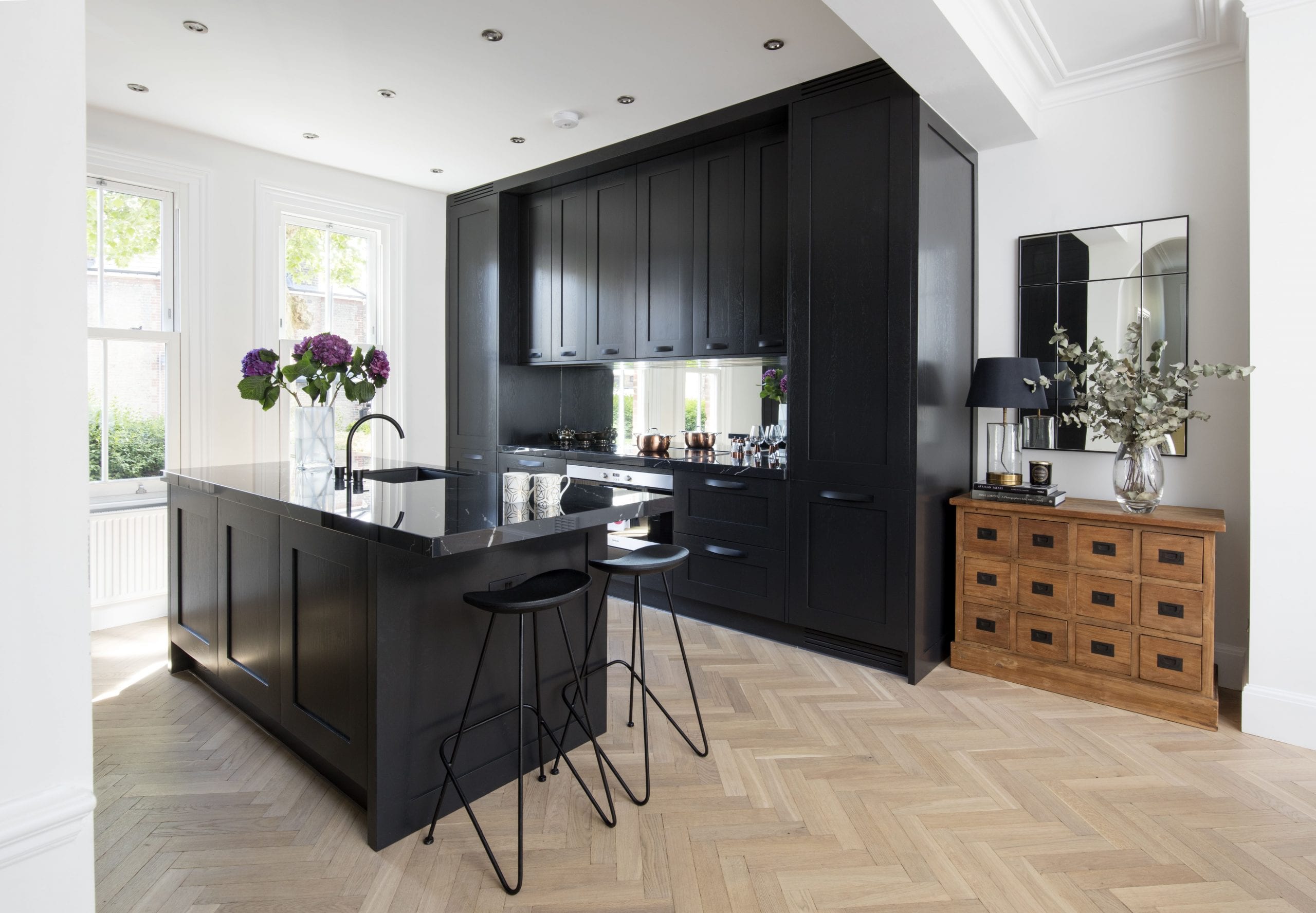 Amberth’s Durlston Road Project built for a busy professional couple with three young children
Use Your Experience To Be More Deliberate About Where You Invest
The first time you renovate, it can be difficult to know where the value really sits. Everything is new. Every decision feels important. Once you have lived with a completed renovation, your definition of value tends to become more personal.
You know which beautiful detail still makes you happy years later. You also know which expensive feature you stopped noticing within six months. On a second renovation, that often means spending becomes more deliberate.
If this is where you are at, you might enjoy reading our blog on renovation budget planning and how to align it from the start.
Choose Your Renovation Experience As Carefully As The Finished Space
Across the renovations we have delivered, one of the biggest differences we see in clients who have renovated before is how much more attention they pay to the process itself.
You have experienced what happens when decisions arrive late, communication isn’t clear, or you are left coordinating people yourself. This time, you know those things matter just as much as the choices you can see.
You are not only choosing the finished room. You are choosing the experience required to get there.
It is one reason a review from a returning Amberth customer, Mariko, stood out to us. After Amberth renovated her bathroom in 2019, she returned for her kitchen, explaining that they already knew “how good [Amberth’s] building works and the quality of the materials are.”
That is one of the advantages of having renovated before.
You know what good communication feels like. You understand the value of someone taking ownership. With Amberth, one project manager handles your renovation from first drawing to handover so you don’t have to, and our own team with twenty years of experience and Houzz awards every year since 2018 handles delivery and installation, giving you absolute peace of mind.
“Designing a kitchen was a lot more complicated than a bathroom, and we are not gonna lie, it was a tough process for us… Now, we are 100% happy with our new kitchen.”
Knowing More Means Asking Better Questions
This may be the most surprising lesson of all. Because you have done it before, there can be a temptation to move quickly. You already know what you like. You know you want an island. You are certain you need more storage. You know which mistakes you will not make again.
Experience is valuable, but after 20 years of renovations, let your experience make the questions deeper, not remove them. These are some of the questions we encourage you to ask, whether you have renovated before or not.
What did you constantly carry from one side of the space to another?
Where did clutter accumulate?
What looked wonderful but proved difficult to maintain?
Which part of the room did everybody naturally gravitate towards?
These are the questions we explore with you first, so the decisions that follow are grounded in how you actually live.
Take What You Have Learned And Let It Shape Your Next Choices
Living in a space gives you knowledge that no mood board, showroom or magazine can provide. It teaches you about your routines, your priorities and the tiny interactions that make a home feel easy to live in.
That is the real opportunity the second time around. To take everything your previous home taught you and ask a much better question:
Knowing what you know now, how do you want to live next?
FAQs
What should I do differently on my second renovation?
Start by looking at how your first renovated home actually worked in daily life. Your second renovation should be shaped by that evidence rather than simply correcting old mistakes.
Is a second renovation usually easier than the first?
It can feel more familiar, but it is not automatically easier. You may understand the process better, yet every property brings different constraints, and your needs may have changed.
How do I avoid repeating mistakes from my first renovation?
Try to identify the reason behind each frustration. If you lacked storage, for example, ask whether you truly needed more storage or whether the existing storage was badly positioned.
What should I prioritise in a second home renovation?
Prioritise the things that affect everyday life: layout, lighting, storage, circulation, durability and how different rooms support your routines.
Should I use the same renovation team again?
If the first experience gave you confidence in the team’s communication, workmanship and project management, there can be real value in an established relationship. If not, use what you learned the first time to be clearer about the level of ownership, coordination and communication you expect from your next team.


