


If you’re looking for a reliable kitchens and bathrooms remodel company to support your North London project, you’ve come to the right place. Reach out.
When your renovation goes over budget, your instinct is often the same: Something must have gone wrong.
And sometimes, that quickly becomes a question of trust.
But in most cases, renovation cost overruns aren’t caused by dishonesty. In our twenty years in the industry, we’ve seen they’re the result of something far more common – and far more avoidable.
A lack of structure around decisions.
When people ask why renovations go over budget, the answer is rarely a single mistake. It’s usually a series of small shifts that happen at the wrong time, in the wrong order, or without full visibility. And those shifts compound.
Where Budget Drift Actually Begins
At the start of your project, everything feels aligned. There’s a clear direction. A defined project scope. An agreed investment range.
But unless that scope is fully resolved during design development, it remains flexible, even if it appears fixed. This is where cost clarity begins to soften.
Despite the appearance of a plan, not everything has been decided.
The Impact of Decision Timing
One of the most common causes of renovation cost increases is timing.
Decisions made early tend to be efficient. Decisions made later tend to be reactive.
When key elements like layouts, materials, and fittings are finalised during design, they can be priced accurately and built logically.
When those same decisions move into the construction phase, they affect:
- labour
- sequencing
- materials already ordered
- work already completed
This is where decision timing directly influences cost.
Small Changes, Compounding Effects
A single change rarely causes a problem. But multiple small scope changes can quickly reshape your project. This can come in many different forms:
A different tile selection.
An upgraded appliance.
A revised layout detail.
Each decision may feel incremental to you, but together they add up to alter your original budget alignment.
The Role of Specification Gaps
Another key factor is specification gaps.
When your drawings or selections are not fully resolved, allowances are often used instead:
- provisional sums
- estimated materials
- flexible assumptions
These create a starting point but certainly not a fixed outcome.
As the details become clearer, those allowances are replaced with real costs. And that’s when budgets appear to “increase”, even though they were never fully defined to begin with.
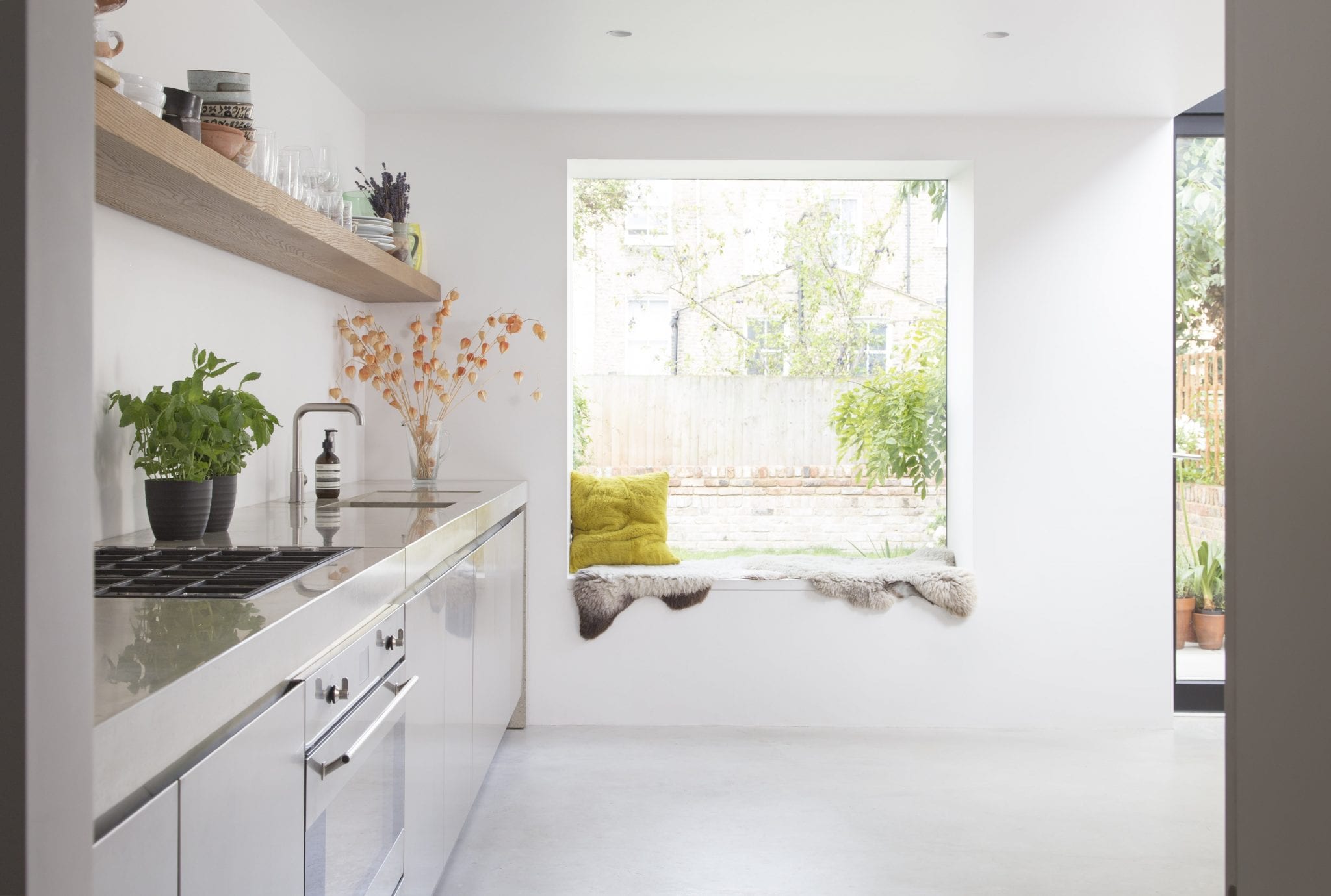 Chesholm Road kitchen renovation project in London by Amberth
Why It Rarely Feels This Way at the Start
At the early stages, flexibility can feel helpful. It allows creativity. It keeps the momentum moving. It avoids overcommitting too soon.
But without structure, that flexibility carries forward into later stages, where it becomes far more expensive to resolve. This is the point where client expectations begin to shift.
This is something you can only experience to truly know and understand. With two decades of beautiful kitchen renovation and bathroom remodelling behind us, our nuanced at Amberth, understanding of what to expect makes the budgeting process clear and precise, giving you the confidence and clarity you can rely on throughout your project.
How Structure Prevents Cost Overruns
The most effective way to avoid renovation budget overruns is not tighter control during construction. It’s a stronger resolution before it begins.
This means:
- defining your project scope clearly
- completing decisions during design development
- eliminating specification gaps
- aligning costs before work starts
When this structure is in place, costs stabilise because change is anticipated and managed earlier in your process.
It’s About Clarity Creating Trust
Budget overruns often feel personal. But in most cases, they’re procedural.
They come from:
- decisions made too late
- scope that evolves mid-build
- details that weren’t fully resolved
When structure is applied early, those risks reduce significantly and your project begins to feel different:
- calmer
- more predictable
- easier to navigate
“…I visited recently to get ideas for our new kitchen and was astonished at the wisdom, experience and help. They were never PUSHY, no hard sell, because they understood my reluctance to commit to such a large project in one go. But I will be doing it soon, and I trust them enough to commit to them.” – John Brandler
Have Clarity Before Construction
Your renovation doesn’t stay on budget by accident. It stays on budget through clarity of scope, decisions, and timing.
When those elements are aligned, cost becomes something you understand, and not something that surprises you. And that’s where confidence comes from.
A well-managed renovation isn’t about avoiding change entirely.
It’s about making the right decisions at the right time and understanding their impact before they reach your site.
If you’re planning a project and want to approach it with clarity from the outset, we’d be happy to guide you through it.
.
.
.
.
FAQs: Renovation Cost Overruns
Why do renovation cost overruns happen?
They usually result from scope changes, late decisions, and specification gaps rather than a single major issue.
Are cost overruns always avoidable?
Not entirely, but strong design development and early budget alignment significantly reduce the risk.
What is a specification gap?
It’s when details haven’t been fully defined, leading to estimated costs that are later replaced with actual figures.
How does decision timing affect cost?
Late decisions during the construction phase often require rework, which increases cost.
How can I keep my renovation on budget?
By resolving decisions early, defining the project scope clearly, and ensuring full cost clarity before construction begins.


