

You deserve the right team to take care of your home transformation. Contact Amberth to learn about our home remodelling services – including project management, design, supply, and installation.
Introducing colour into your home doesn’t have to mean dramatic changes or bold leaps of faith. When done thoughtfully, using colour in interior design is one of the most effective ways to refresh a space while maintaining balance and longevity.
For many homeowners, adding colour to your home feels risky, not because colour lacks appeal, but because it’s easy to get wrong without a clear plan. The key isn’t brightness for its own sake, but intention. When colour is applied with confidence and restraint, it brings warmth, depth, and personality without overwhelming the space.
Start With a Considered Colour Palette
Successful colour begins with a clear colour palette.
Rather than layering multiple bold tones at once, start with a restrained base and introduce colour gradually. Perhaps this starts with a gentle mocha mousse or the colour soft peach. This approach creates balanced interiors that feel cohesive rather than chaotic. Neutrals don’t disappear in this process, though. They act as a backdrop that allows colour to feel purposeful.
A well-considered palette ensures colour enhances the architecture rather than competing with it.
Let Statement Furniture Do the Talking
One of the most effective ways to introduce colour is through statement furniture.
A sofa, armchair, or dining chair in a confident hue can anchor your room without requiring widespread change. These feature pieces bring out your personality while remaining flexible. They can be reupholstered, repositioned, or updated over time as your tastes change.
This approach works particularly well if you want colour without committing to permanent finishes.
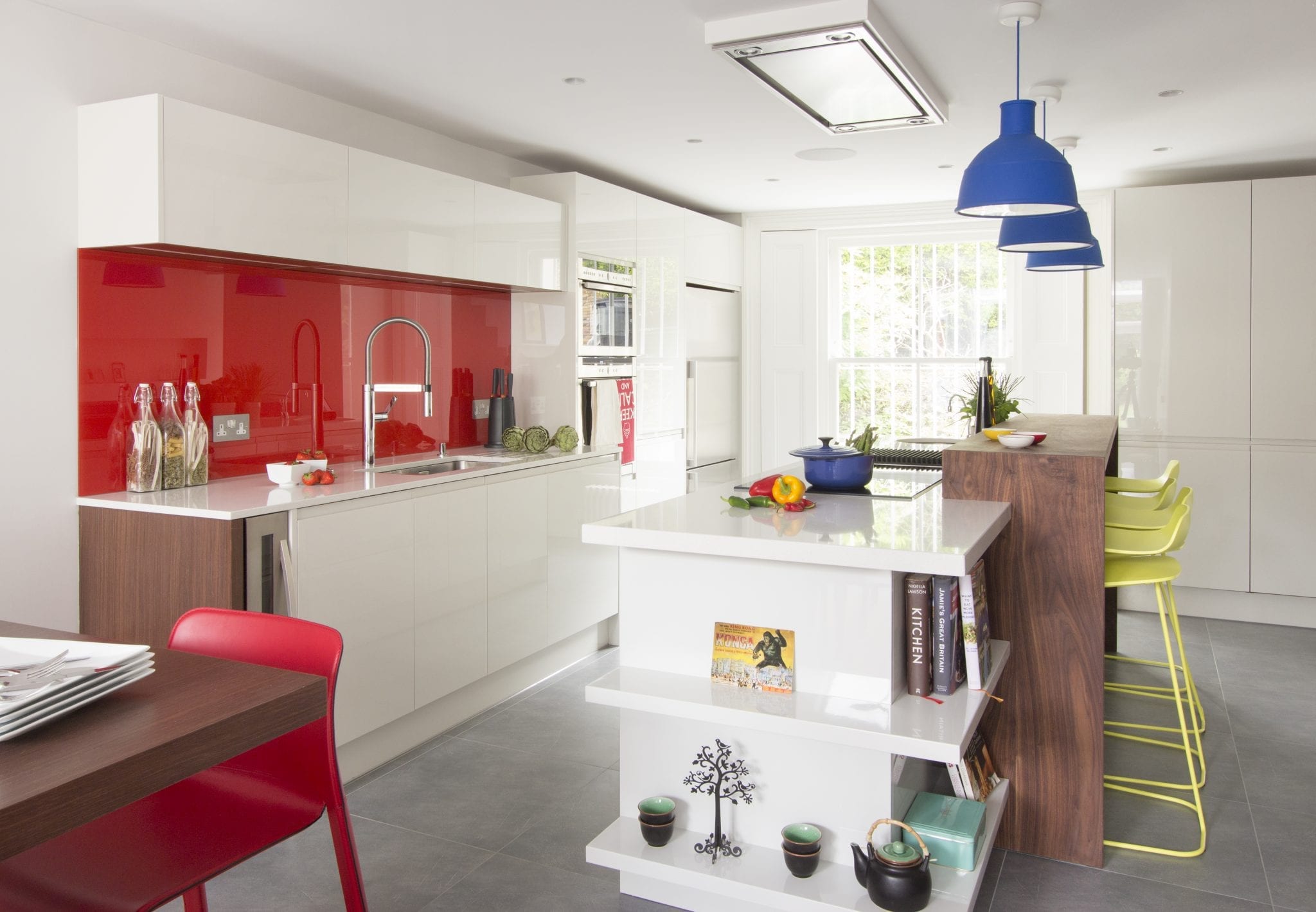 Statement Fittings, Furniture and Splashback in Crowland Terrace Project, London, by Amberth
Use Fabrics as a Low-Risk Introduction
Soft furnishings are a powerful entry point for colour.
Cushions, throws, and curtains allow you to experiment with tone and texture while maintaining control. These elements support interior styling by adding warmth and depth, and they’re easy to adjust as your tastes evolve.
Fabrics are also an effective way to explore colour psychology, subtly influencing how a room feels without dominating it.
Bring Colour Underfoot
Rugs are often overlooked, yet they’re one of the most effective tools for introducing colour.
Art-led or patterned rugs provide visual interest while grounding furniture layouts. They work particularly well in open-plan spaces, where colour can help define zones without physical separation.
Used well, rugs support both your comfort and room cohesion.
Kitchen Colour Ideas That Feel Intentional
Kitchens benefit from a measured approach to colour.
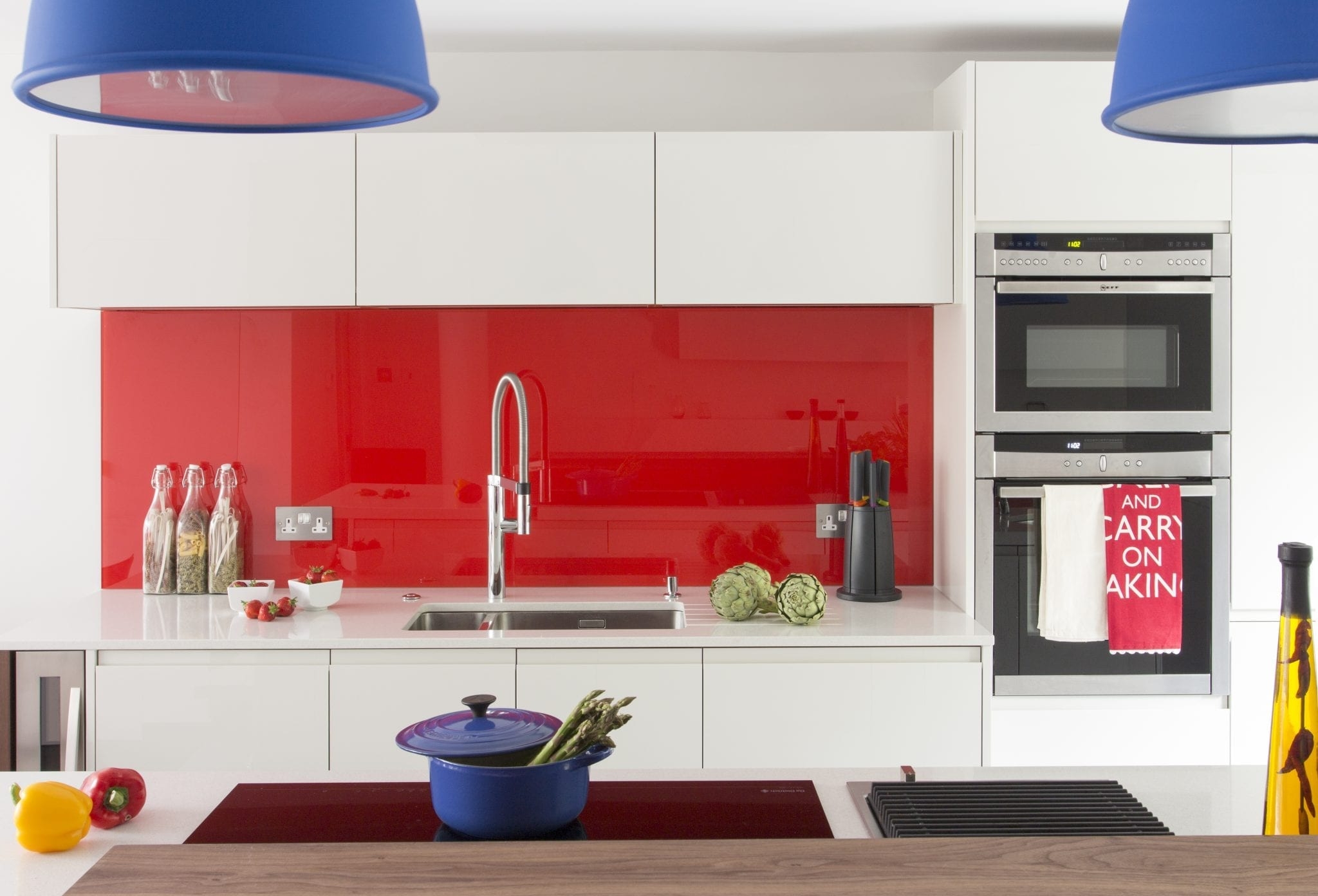
Rather than overwhelming the space, thoughtful kitchen colour ideas focus on targeted areas like splashbacks, cabinetry accents, or carefully chosen accessories. These moments of colour add character while preserving clarity and function.
In practical spaces, restraint ensures colour feels enduring rather than trend-driven.
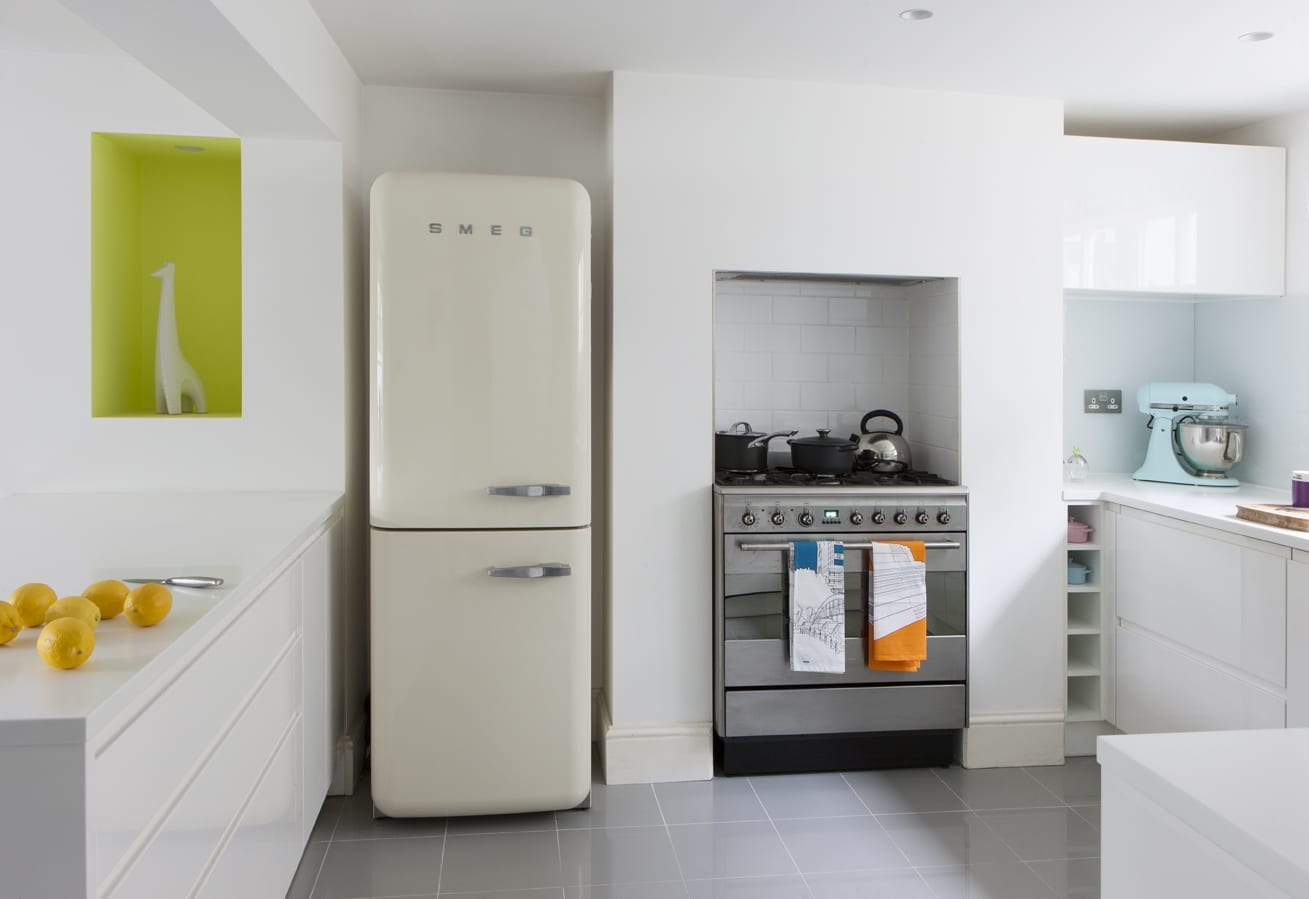 Buckingham Road Interior Design Project in London, by Amberth
Highlight Architectural Features With Colour
Paint doesn’t have to cover every wall to be effective.
Using colour to emphasise architectural features you like, such as alcoves, shelving, or structural details, creates depth and definition. This technique allows colour to enhance the space without overpowering it.
It’s a subtle way to introduce contrast while respecting your room’s proportions.
Why Balance Matters More Than Boldness
Colour works best when it’s part of a wider design conversation.
When tones are introduced with intention, they support flow, proportion, and mood. This is what separates confident use of colour from decorative impulse. Using colour in interior design successfully means knowing where to stop as much as where to begin.
The goal isn’t to follow trends, but to create spaces that feel personal, considered, and lasting.
Introducing Colour With Confidence
Colour has the power to transform how your home feels, but only when it’s used with clarity and intent.
If you’re considering introducing colour and want it to feel confident rather than overwhelming, thoughtful design makes all the difference. With the right balance of restraint and expression, colour becomes an asset rather than a risk.
If you’d like guidance on using colour in interior design in a way that feels considered and enduring, come for a free consultation at our Islington Studio.
.
.
.
.
FAQs: Using Colour in Interior Design
How can I start adding colour to my home without overwhelming it?
Begin with a clear colour palette and introduce colour through furniture, fabrics, or feature pieces rather than large-scale changes.
Do bold colours work in smaller spaces?
Yes, when used intentionally. Controlled use of accent colours and balanced proportions can add depth without making a space feel crowded.
Is colour better used in furniture or on walls?
Both work well, but furniture and fabrics offer flexibility. Walls and architectural features are best coloured once the overall scheme feels resolved.
How does colour psychology affect interiors?
Colour psychology influences mood and perception. Warm tones can feel inviting, while cooler tones create calm and clarity when used thoughtfully.
Can colourful interiors still feel timeless?
Absolutely. When colour is balanced, purposeful, and integrated into the wider design, it enhances longevity rather than dating a space.


