


Renovation tests far more than your patience. Beyond the dust and delays lies a quieter strain: decision fatigue, disrupted rituals, and the loss of sanctuary within your own walls. Few admit how emotionally demanding it is to live amid the remaking of the place meant to restore you.
If you’re living through a renovation, you already expect disruption.
You know there will be dust, noise, shifting schedules and a few uncomfortable weeks while your home is taken apart and put back together.
But for many people, the reality of living through home renovation feels harder than expected, not because they were naïve, but because the real pressure sits beneath the obvious inconvenience.
What often catches people off guard is the cumulative weight of managing renovation stress while still trying to live a normal life.
You’re not simply coping with builders in the house. You’re working around a broken daily routine, making last-minute design decisions, adjusting to a temporary kitchen, and trying to stay calm inside a home that no longer behaves like one.
That’s why renovation stress can feel so disproportionate to what’s happening on paper. It’s the mental effort of functioning inside uncertainty and disruption.
Renovation disruption is only part of the story
When people talk about living through building work, they tend to focus on the visible frustrations: the mess, the noise, the lack of privacy, the fact that the kettle is now in the hallway and your dining table has become a storage zone for samples, paperwork and half-packed crockery.
Those things matter. But they’re only part of the story.
After 20 years in interior remodelling, we know that the hardest part of a renovation is rarely one dramatic problem. More often, it is the accumulation of small decisions, shifted routines and unresolved details that make the experience feel tougher than expected.
Your routines disappear long before the project is finished
Most people don’t realise how much of daily life runs on habit until those habits are removed.
Psychological research on habit disruption shows that habitual behaviour depends heavily on stable contextual cues, and when those cues change, habits are disrupted.
In a renovation, this happens constantly. The coffee machine moves. The cereal bowls are packed away. The bathroom is unavailable. The surface you normally use is covered, removed or inaccessible.
None of this is catastrophic. But it does mean your daily routine stops being automatic and starts requiring active thought.
That is tiring in a way people rarely talk about.
Decision fatigue builds quietly in the background
A renovation is also a decision-making environment.
Some decisions are exciting at the beginning, but when those choices carry into the construction phase, or when unresolved details resurface on site, they become much heavier.
Instead of making thoughtful design decisions in a calm setting, you’re making them while juggling work, family life and a house that is half-operational.
This is where decision fatigue becomes so significant. It isn’t simply the number of choices, but the timing of them, the pressure attached to them, and the fact that they often arrive when your patience is already low.
Good project planning reduces this by resolving as much as possible before construction begins. It gives the project structure. It protects the household from having to make important calls in the middle of an already demanding week.
Uncertainty is more draining than disruption
Most people can tolerate inconvenience surprisingly well when they know what is happening and how long it will last.
What tends to wear people down is uncertainty.
If the renovation timeline feels vague, if the order of work keeps changing, or if you’re not sure whether a delay is minor or meaningful, the whole experience becomes more mentally consuming.
You start asking questions that are difficult to answer from inside the project: Is this normal? Are we behind? Do we need to make another decision today? When will the kitchen actually be usable? Will the bathroom be finished before guests arrive? Is the house going to feel like this for another week, or another month?
That uncertainty is often more exhausting than the site dust and noise itself. It keeps the project mentally open.
Living on site turns ordinary tasks into logistical ones
There is also the simple, practical strain of living on-site.
Laundry needs rerouting. Meals need simplifying. Work calls need to be planned around site access. Children and pets need to be kept away from active areas. Deliveries need somewhere to land. Valuables need moving. Basic privacy becomes harder to protect. Even rest can feel elusive when there is always a reminder, somewhere in the house, that the renovation process is still in motion.
This is why even small domestic tasks can start to feel disproportionately difficult. Nothing is impossible. It just takes more steps than it used to.
Good planning won’t remove disruption, but it can reduce unnecessary stress
No renovation can be entirely frictionless. If walls are moving, plumbing is being rerouted, or a kitchen is being rebuilt, life will be disrupted.
But good planning can reduce the stress that comes from preventable uncertainty.
A well-managed project should give you clarity on the sequence of work, visibility into the renovation timeline, and enough design development up front that major design decisions are not made reactively on site.
It should also prepare you for the moments that will feel most inconvenient, so they don’t catch you by surprise.
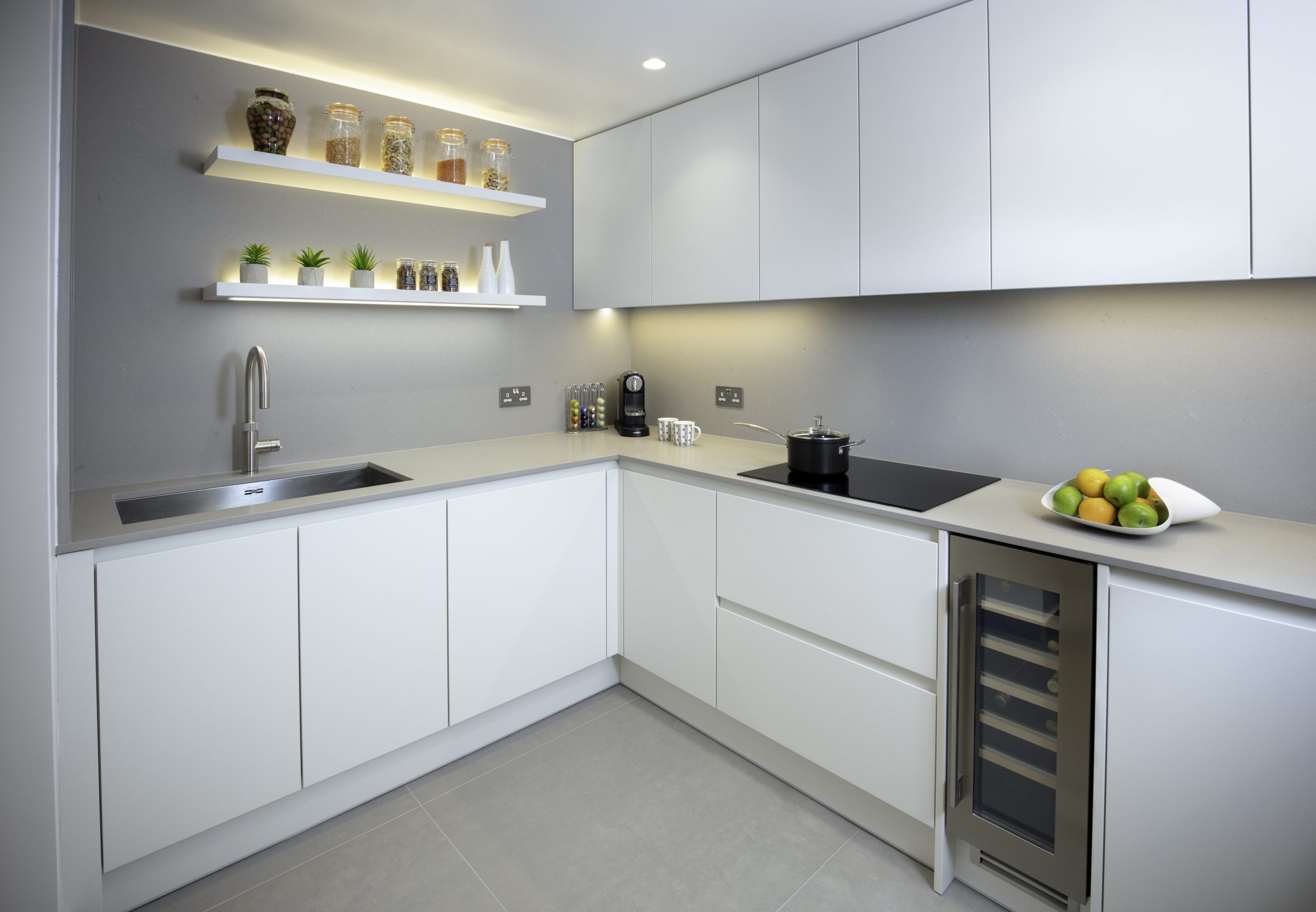
This is particularly important in whole-home projects, where the disruption is not confined to a single room. In Amberth’s Wapping High Street project, the brief involved upgrading the entire flat, with work carried out in each space to improve storage, functionality, maintenance, and flow.
In a project of that nature, the challenge is coordinating the sequence of decisions, specifications, supply and installation so the process feels as clear as possible while the home is being transformed.
That is where Amberth’s design, supply and installation approach becomes valuable. By resolving details early, coordinating the moving parts, and treating the home as a single connected environment, the project can be managed with less uncertainty for you.
“[Amberth’s] care is evident throughout every touch point and most, in the quality of the finished rooms, but perhaps as testament to this, they treated our home as if it were their own, and I’m so grateful.” – Monique
Read more and other similar reviews on our Houzz profile.
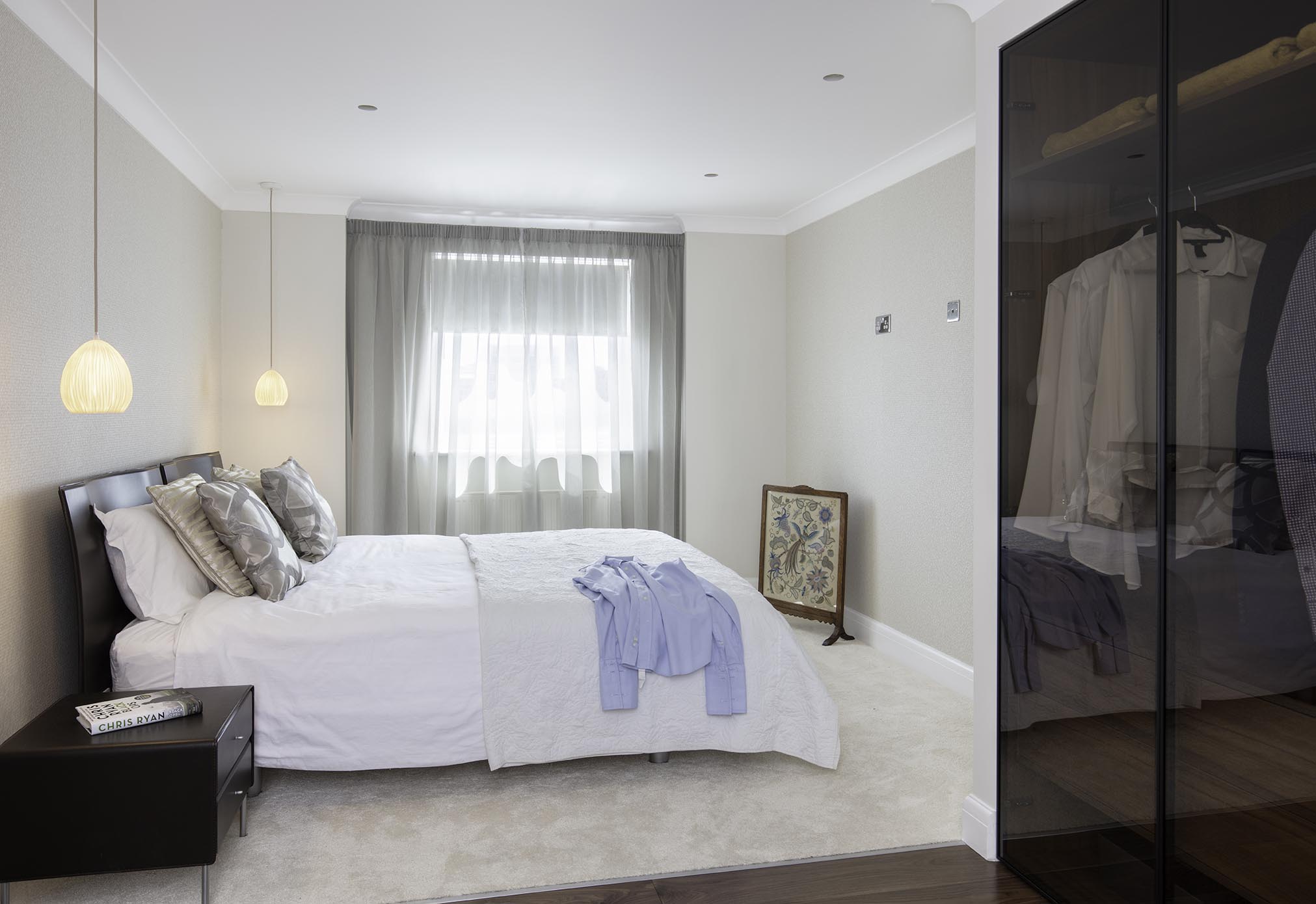 The bedroom of a full interior remodel in Wapping High Street, London, by Amberth
The goal is steadiness.
Living through a renovation is both a practical and cognitive challenge. It asks more of your attention, patience, and flexibility than most people expect.
The most successful renovation experiences are those in which disruption has been anticipated, explained, and coordinated well enough that your household can continue functioning through it.
If you’re planning a renovation and want the process to feel clearer from the outset, we’d be happy to help you think it through before work begins.
You can explore our kitchen and bathroom projects, or get in touch if you’d like guidance on structuring a project from the start.
FAQs
Is living through a renovation always stressful?
Not always in the same way, but most people find living through a renovation more tiring than expected because it affects both the practical side of home life and the mental load of decision-making. Disruption is normal. What makes the experience harder is when uncertainty, late decisions or poor coordination are added to it.
How do you reduce renovation stress when living in the house?
A realistic renovation timeline, a well-planned temporary kitchen, early design decisions and clear communication all help reduce avoidable pressure.
Is it better to move out during a renovation?
It depends on the scale of work, the layout of the house and your tolerance for disruption. For some projects, living on site is entirely manageable with the right planning.
Why does renovation stress feel so exhausting?
The cumulative effect is what makes it feel so draining. It’s the combination of noise, disruption, altered routines, decision fatigue, uncertainty and the effort of managing normal life inside an active renovation process.
What should be decided before a renovation starts?
As much as possible. Layouts, finishes, fixtures, joinery details, lighting, appliances and key technical decisions are all better resolved before work begins. The fewer major design decisions that spill into construction, the smoother the project tends to feel.


