

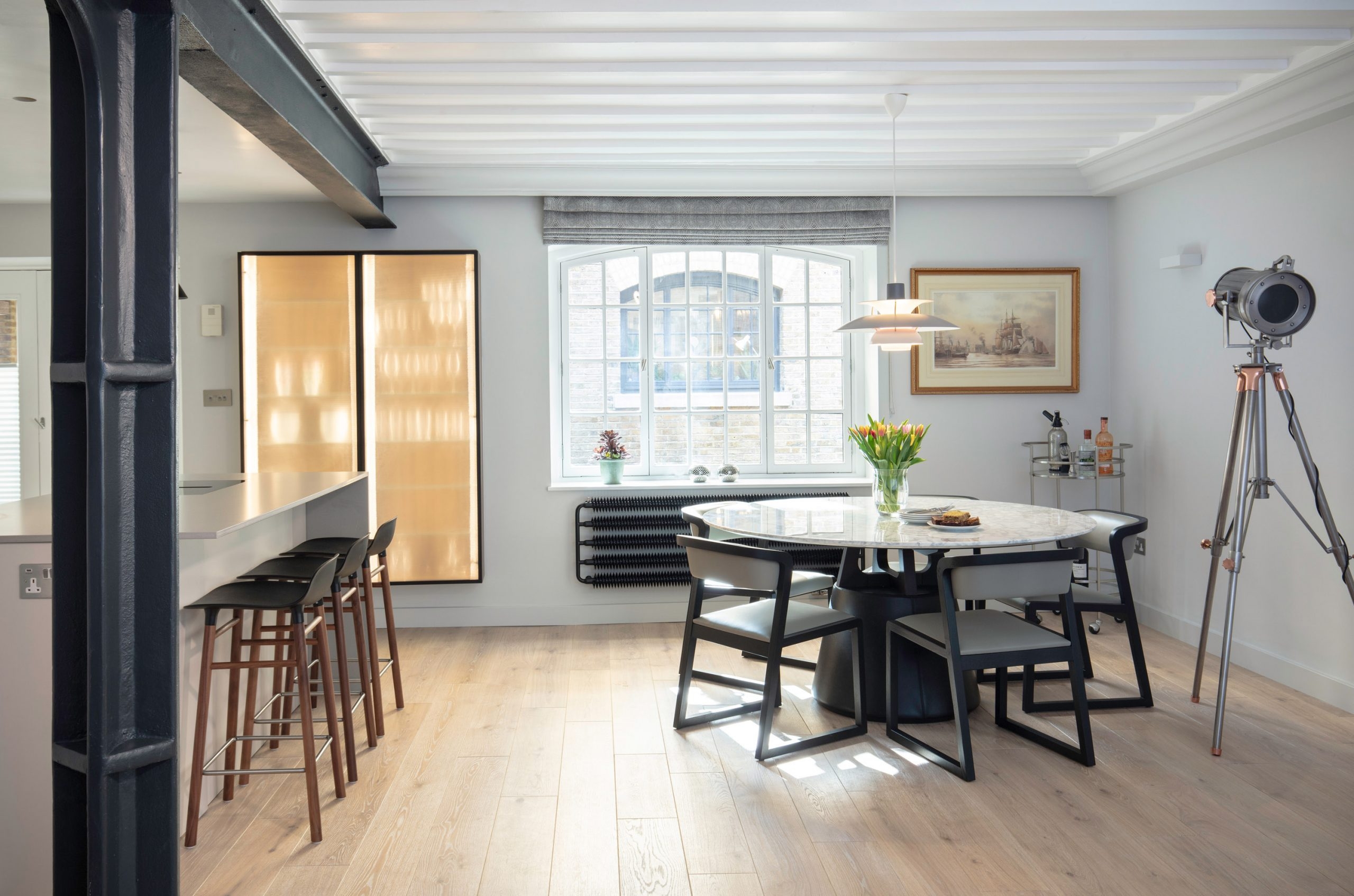
Looking for a kitchen remodeler in North London who can take care of the project management for you? Reach out to us.
Learning how to make a small space feel bigger isn’t about clever tricks or visual shortcuts. It’s about understanding how space is perceived and how thoughtful design decisions can transform even the most compact rooms into calm, functional environments.
Whether you’re working with a small bathroom design, a compact kitchen design, or a modest living space, the goal is the same: improve visual space, ease movement, and create a sense of flow. It goes beyond dividing a bedroom into 2. With the right balance of layout planning, light, and storage, making a small space feel bigger becomes a natural outcome of good design rather than a decorative exercise.
Start With Layout, Not Decoration
The most effective way to make a small room feel bigger begins with layout planning.
How you move through a space matters more than how it’s styled. Clear circulation routes, logical zoning, and uncluttered sightlines all contribute to better spatial flow. When layouts are carefully considered, your rooms feel calmer and more generous even before materials are introduced.
In kitchens and bathrooms, especially, small layout changes can dramatically improve how your space is experienced.
Use Light to Expand Visual Space
Light is one of the most powerful tools in small space interior design.
Maximising natural light helps soften boundaries and visually extend a room. Where daylight is limited, reflective surfaces and layered lighting can achieve a similar effect, distributing light evenly and reducing harsh contrasts.
The result is a space that feels open and balanced, rather than closed in.
Think Vertically to Create Breathing Room
When floor area is limited, vertical space becomes invaluable.
Tall cabinetry, shelving that reaches the ceiling, and vertically proportioned elements draw your eye upward, subtly increasing the perceived height of your room. This approach is particularly effective in compact kitchen design, where storage needs to work harder for you without overwhelming your space.
Vertical thinking also reduces clutter, which is one of the quickest ways to shrink visual space and your sense of headspace.
Clever Storage Keeps Spaces Calm
A small room feels larger when surfaces are clear, and storage is integrated.
Clever storage solutions, such as built-in cupboards, concealed drawers, and tailored joinery, allow everyday items to disappear without sacrificing accessibility. When everything has a place, rooms feel ordered and spacious rather than busy.
This is especially important in small bathroom design, where visual simplicity directly affects how generous the space feels.
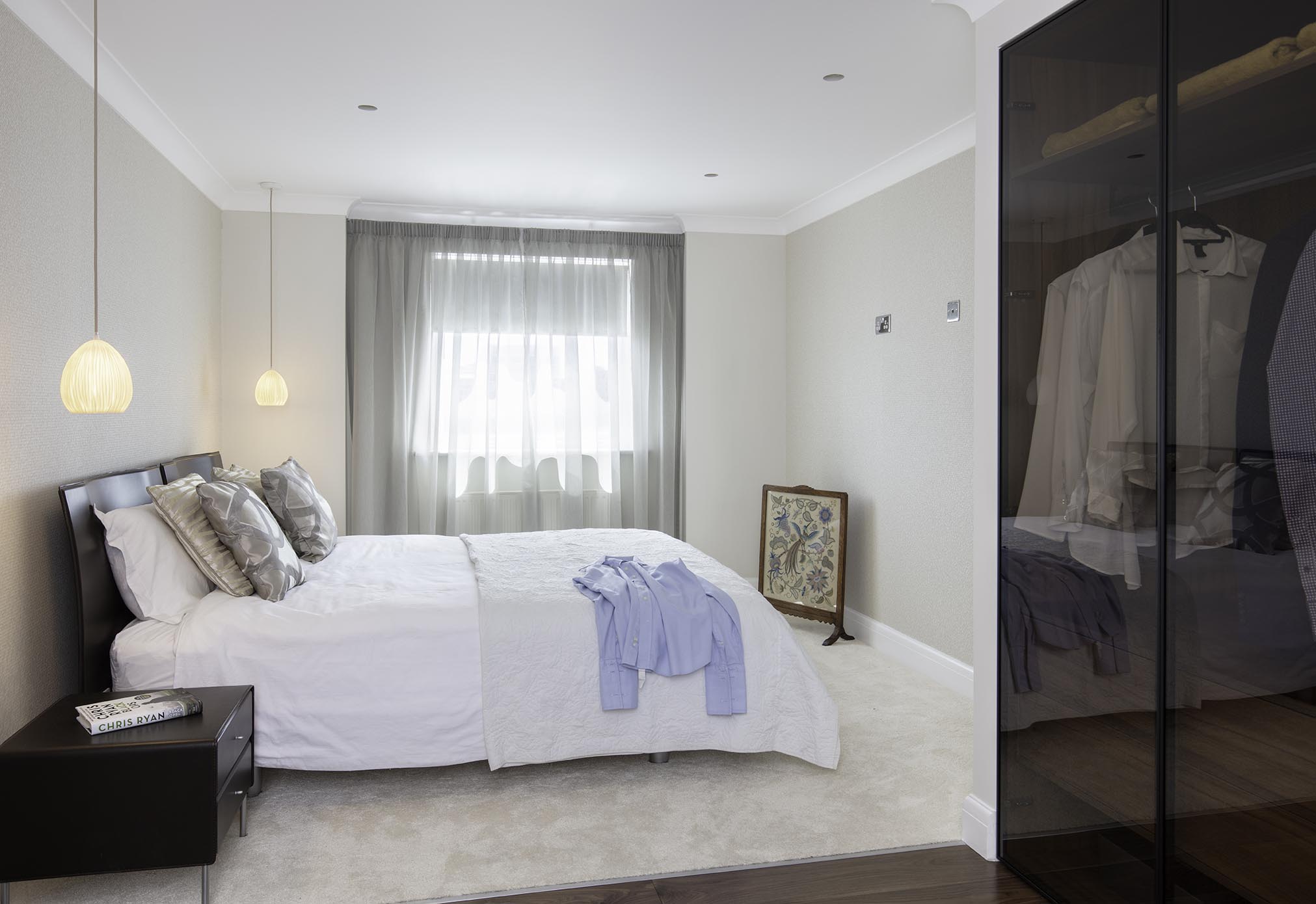 Wapping High Street Project in North London, by Amberth.
Choose Wall-Mounted Elements Where Possible
Wall-mounted furniture plays a subtle but powerful role in small spaces.
Floating vanities, wall-hung cabinetry, and raised fixtures expose more floor area, making rooms feel lighter and easier to navigate. They also enhance spatial flow by reducing visual interruption at eye level.
The benefit is both aesthetic and practical – easier cleaning, clearer lines, and a greater sense of openness.
Let Materials Work Quietly
In smaller spaces, materials should support the architecture rather than dominate it.
Consistent finishes, restrained colour palettes, and low-contrast transitions help unify the room. This doesn’t mean spaces need to feel minimal or characterless, but minimalist interiors often succeed by reducing visual noise, allowing proportion and light to take centre stage.
When materials are chosen thoughtfully, rooms feel composed rather than compressed.
Scale Matters More Than Quantity
It’s a common misconception that small spaces require small pieces.
In reality, fewer, well-proportioned elements often make a room feel larger than multiple smaller ones. Oversized mirrors, uninterrupted surfaces, an infinity tub and confident fixtures can anchor a space and enhance visual clarity.
This principle helps avoid the fragmented feeling that can make rooms feel smaller than they are.
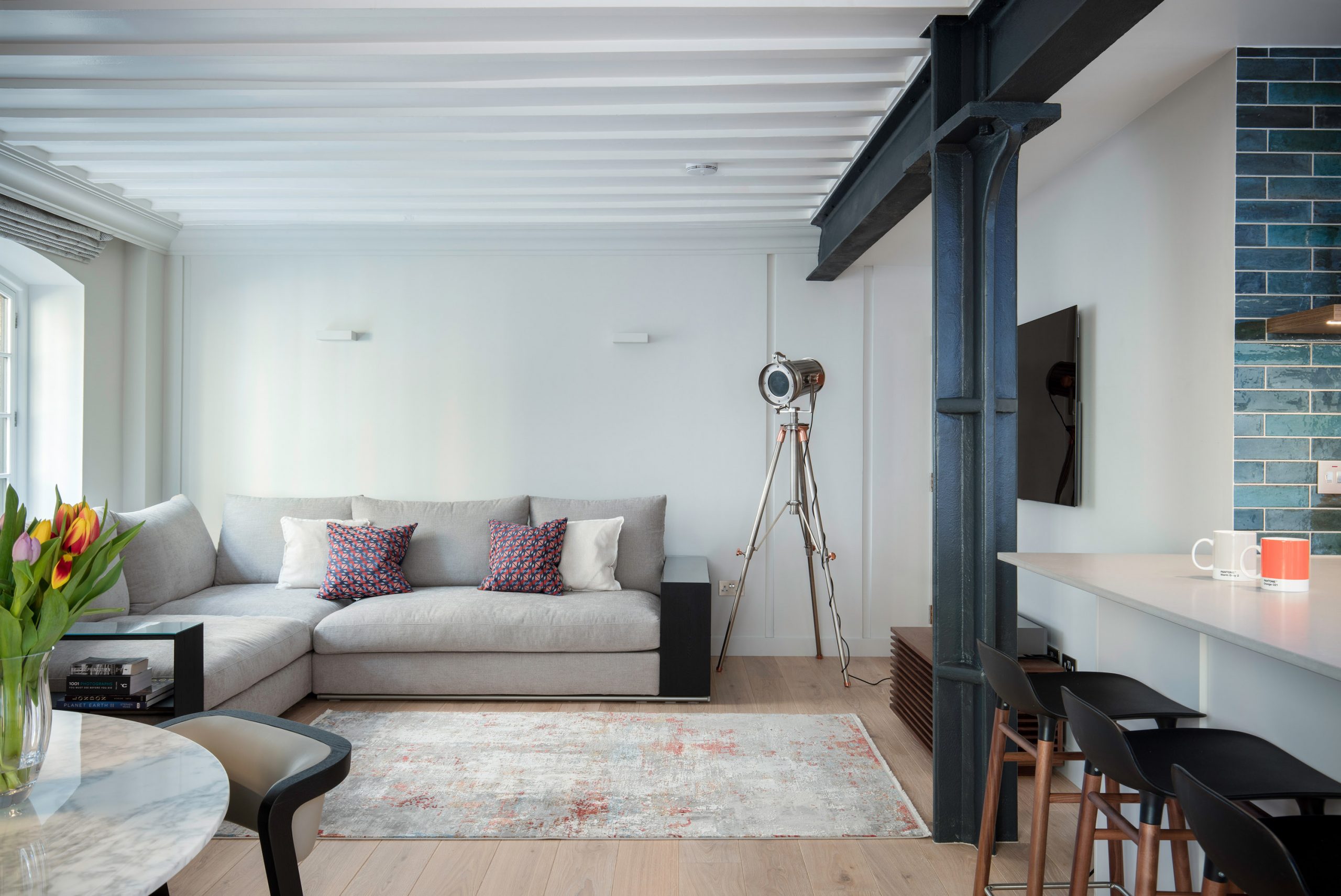 Shad Thames Project Near Tower Bridge, Bermondsey, London, by Amberth
Design That Makes Space Feel Natural
Ultimately, the best way to make a small space feel bigger is to design it holistically.
When layout, light, storage, and proportion are considered together, space feels intuitive. There’s no reliance on tricks, just thoughtful decisions that support how the room is used day to day.
This is where good design quietly reveals itself.
Designing Small Spaces With Confidence
If you’re planning a renovation and want to make a small space feel bigger without compromising character or function, thoughtful design makes all the difference.
By approaching compact spaces with clarity, proportion, and purpose, it’s possible to create rooms that feel calm, practical, and far more generous than their footprint suggests.
If you’d like to explore how considered design can transform your home, download our Renovation Readiness Check.
This is the same framework we use at the very beginning of our consultation process. So by completing it properly, you’ve essentially started the consultation process.
The next best step? Come visit us at our Islington design studio. We’d be happy to talk through it all with you.
.
.
.
.
FAQs: Making Small Spaces Feel Bigger
What is the most effective way to make a small space feel bigger?
Thoughtful layout planning and clear spatial flow have the greatest impact, supported by light and integrated storage.
Does minimalism always work in small spaces?
Minimalist interiors often help reduce visual clutter, but warmth and character can still be introduced through materials and texture.
How important is storage in small rooms?
Extremely. Clever storage keeps surfaces clear, which significantly improves visual space and calm.
Do wall-mounted elements really make a difference?
Yes. Wall-mounted furniture exposes more floor area and reduces visual interruption, helping rooms feel lighter.
Can small bathrooms and kitchens really feel spacious?
Absolutely. With careful layout planning, use of vertical space, and good light, even compact rooms can feel generous and composed.


