

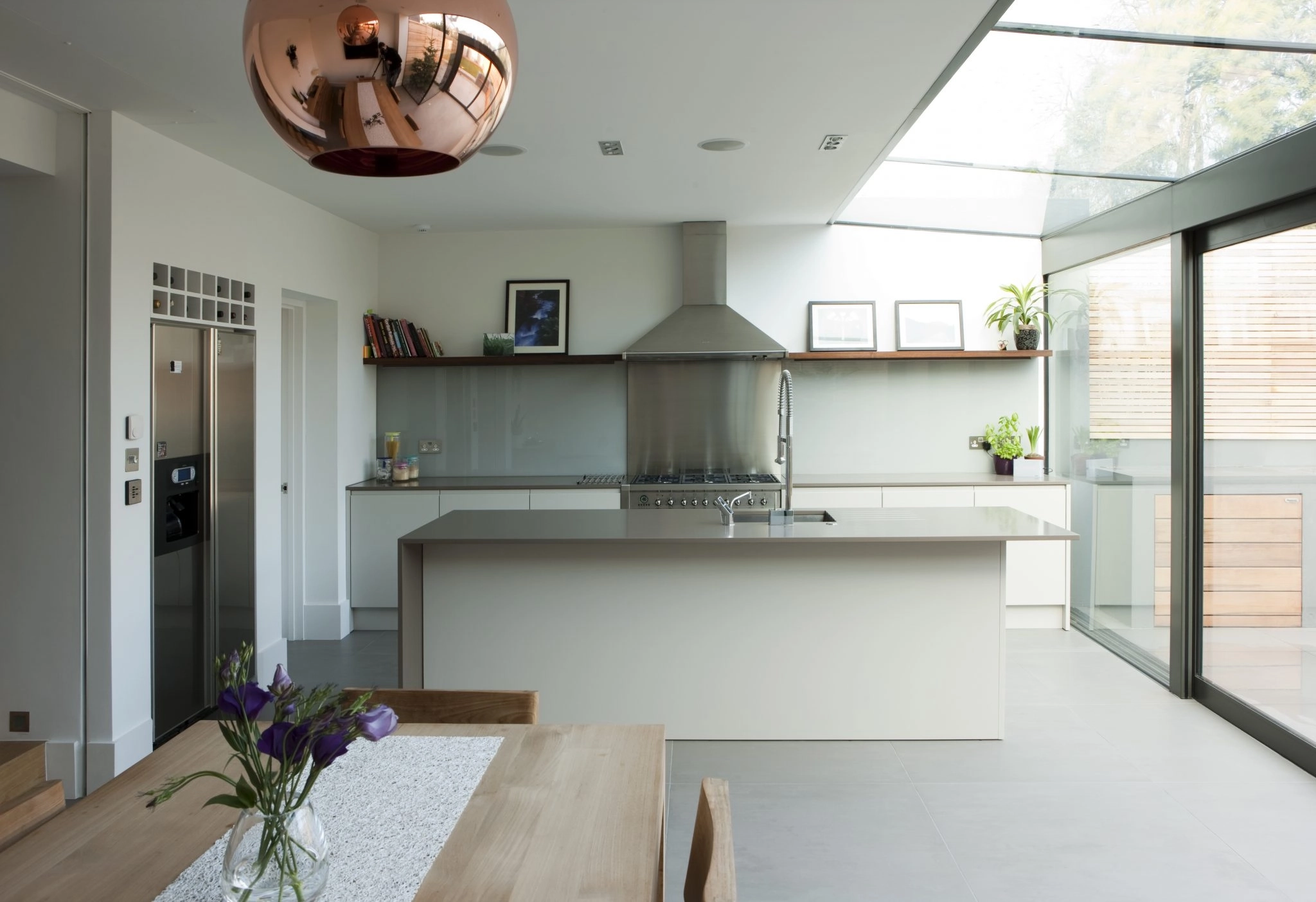
Designing a beautiful space and caring about the planet don’t need to be two separate goals. With sustainability now a key consideration for many homeowners, there are plenty of ways to reduce your kitchen’s carbon footprint – without compromising on style or function.
Here’s how to make smarter, greener choices that align with your lifestyle.
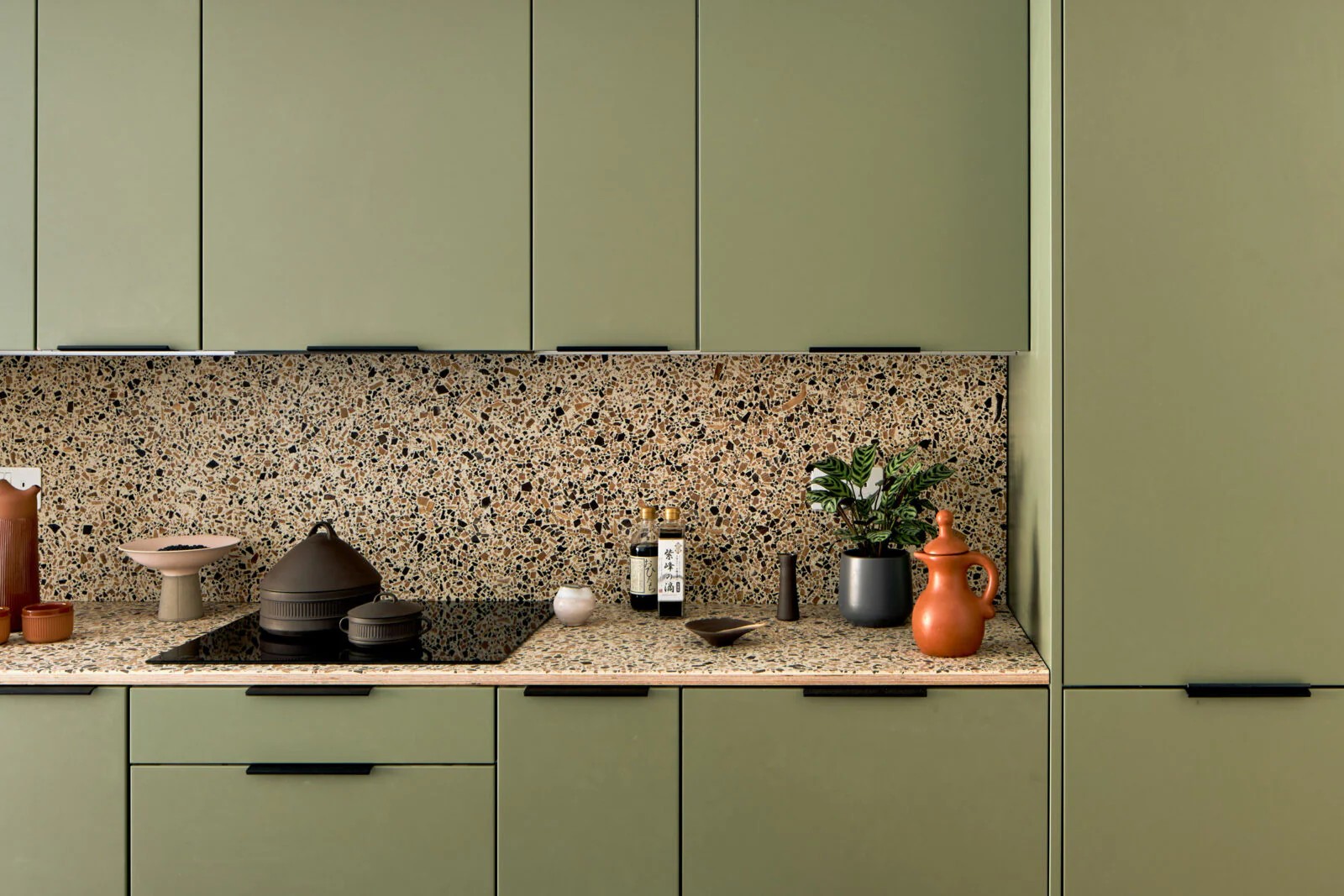
Choose Sustainable Materials That Last
Your finishes play a big role in your space’s environmental impact. Opt for responsibly sourced woods, recycled metals, and low-impact tiles and surfaces.
Composite stone worktops made from recycled materials offer durability and timeless appeal.
Go for Energy-Efficient Appliances
Appliances account for a significant chunk of household energy use. When designing your kitchen, make energy efficiency a top priority. Luckily, 2025 kitchen innovations are in abundance, and transforming homes all over London.
- Look for A-rated fridges, ovens, and dishwashers.
- Choose water-saving taps and plumbing systems
- Install underfloor heating with a programmable thermostat to prevent energy waste.
Invest in Smart Ventilation
Poor ventilation isn’t just bad for comfort. It can also lead to increased energy use, maintenance issues, and complications you’d rather not worry about. Integrated systems like vented hobs help reduce moisture and improve air quality.
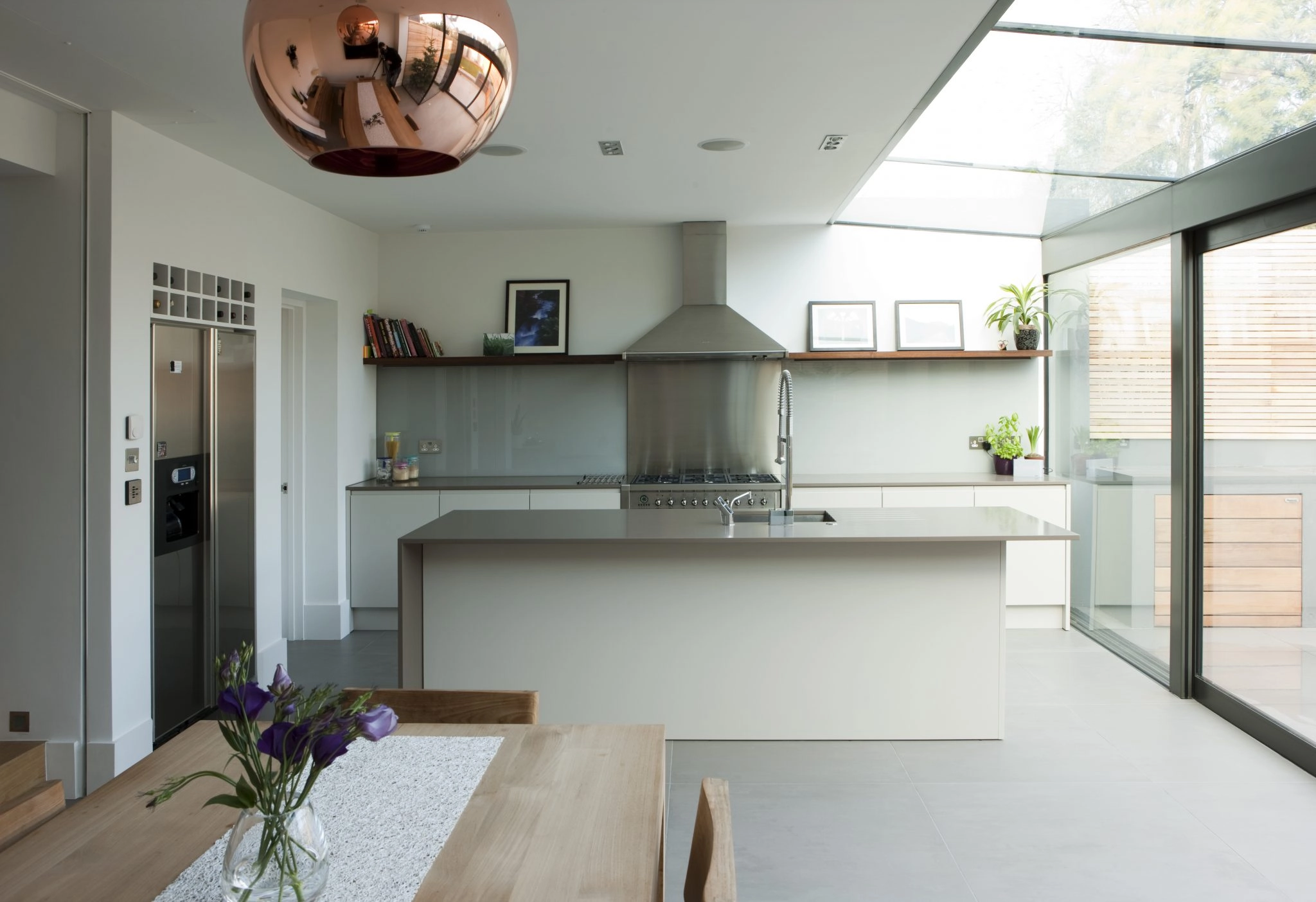 Amberth Project | A cohesive, streamlined, open plan kitchen
Make the Most of Natural Light
A smart layout and carefully selected finishes can help reduce reliance on artificial lighting. Choose lighter tones for cabinetry, reflective surfaces like gloss tiles or glass splashbacks, and consider installing skylights or larger windows during a renovation.
Pro tip: LED lighting with dimmer controls allows you to set the right mood and reduce consumption when full brightness isn’t needed.
Think About Water Waste
It’s easy to overlook how much water your kitchen use. But a few small swaps can make a big difference.
- Install smart taps that can provide both boiled and cool water, such as Quooker.
- Fix any drips or leaks as soon as they appear.
- If it fits your lifestyle, consider a greywater recycling system.
Source Locally Where You Can
Local materials and suppliers reduce transport emissions and support the UK’s design and manufacturing industry. At Amberth, we work closely with British suppliers to ensure our kitchens and bathrooms don’t just look incredible. They also leave a smaller footprint.

Plan for Longevity
Good design is sustainable design. We always recommend clients go bespoke, not because it’s luxurious, but because it lasts. When your space works for your needs and lifestyle, you’re less likely to rip it out and start over.
Final Thoughts
Minimising your carbon footprint doesn’t mean making sacrifices. It just means making smarter choices. Whether you’re updating your kitchen, rethinking your bathroom, or planning a full renovation, there’s always a way to reduce your impact and stay beautifully on-brand.
FAQs
How can I make my kitchen more eco-friendly?
Use energy-efficient appliances, opt for LED lighting, and choose durable, sustainably sourced materials. A well-designed layout also helps reduce energy and water waste long-term.
What materials are best for a sustainable kitchen?
Reclaimed wood, bamboo, recycled composites, and responsibly sourced stone or quartz all offer lower-impact alternatives that still look beautiful and last for years.
How can I reduce energy use in the kitchen?
Invest in A-rated appliances, choose induction or vented hobs, and maximise natural light where possible. Smart lighting and careful zoning can also help.
Are water-saving taps worth it in kitchens?
Yes – aerated or low-flow taps can significantly cut water usage, especially when paired with energy-saving dishwashers.
Can a sustainable kitchen still feel luxurious?
Absolutely. Sustainability isn’t about doing less – it’s about doing better. At Amberth, we tailor every kitchen to reflect your lifestyle and your values.


