


Looking for a North London-based interior design company to take care of your kitchen design or bathroom renovation project? You’ve come to the right place. Let’s grab a coffee.
If you’re used to operating at a senior level, complexity doesn’t faze you. You manage competing priorities, make high-impact decisions daily, and carry responsibility without flinching. So when you decide to renovate your London home, it only seems reasonable to assume it will be manageable, too. Right?
Not exactly. Many senior professionals are surprised by how disruptive renovations can become. Not because of cost or taste, but because of renovation overwhelm, and the way it quietly erodes mental bandwidth and increases cognitive load. Nevermind how long it takes to install a kitchen or bathroom. And when a project becomes more demanding than expected, it leads to renovation burnout.
The first thing you need to know is: this isn’t a question of capability. It’s a question of capacity.
Why Are Renovations So Disruptive?
On paper, a renovation looks finite. There’s a scope, a timeline, and a clear endpoint. But in practice, renovations, such as fitting a bathroom, create a constant stream of low-level decisions and interruptions.
Questions arrive sporadically. Information needs reviewing at inconvenient moments. Choices that feel small still require attention. Over time, this creates renovation overwhelm, not through drama, but through accumulation and project overwhelm.
For professionals already operating at full capacity, this additional cognitive demand doesn’t replace anything else. It simply stacks on top.
Mental Bandwidth Is Finite
Leadership roles demand sustained focus. Strategic thinking, people management, and decision-making all draw from the same mental reserve. Renovations tap into that reserve in a different way.
They require context-switching. They introduce uncertainty. They pull attention away from work and rest alike.
This is where mental bandwidth becomes the real pressure point. Renovation stress is persistent. It shows up as distraction, tiredness, and decision fatigue, even when the project itself is progressing well.
Why Dual-Income Households Feel It More Sharply
In dual-income households, renovation stress often intensifies. Both partners are managing demanding roles, yet the renovation still needs oversight. Decisions don’t pause simply because diaries are full.
Without a structured process, the project becomes a third job that runs in parallel with two already full careers. This leads to cumulative decision fatigue, where even minor choices start to feel heavy.
The frustration here isn’t about the renovation itself. It’s about the feeling that your attention is being pulled in too many directions at once.
 Bespoke kitchen design built around your professional lifestyle
The Hidden Cost Of Renovation Isn’t Time, It’s Attention
Time can be scheduled. Attention, not so much.
Renovations have a way of following you into evenings, weekends, and moments meant for recovery. You may find yourself replaying conversations, worrying whether something was misinterpreted, or anticipating the next question before it arrives.
This ongoing cognitive load is what makes renovation stress feel disproportionate even when nothing is technically “going wrong.”
Why Being “Hands-On” In Renovation Projects Can Backfire
Senior professionals are often highly effective because they’re involved, responsive, and decisive. But in a renovation context, being too close to every detail can actually increase project overwhelm.
When every decision routes through you, the mental friction multiplies. Instead of preserving control, it fragments focus. Instead of creating reassurance, it creates constant interruption.
What’s needed isn’t less care, it’s better containment.
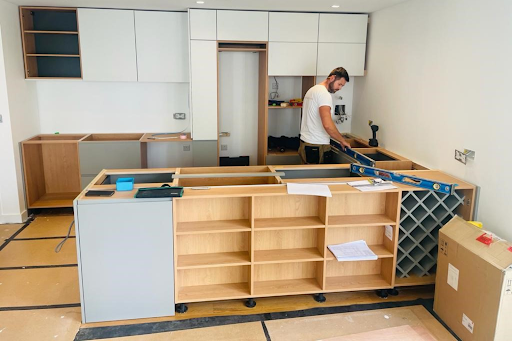
Avoid the renovation chaos with Amberth
What Actually Reduces Renovation Burnout
The renovations that work best for senior clients share a common trait: they’re designed to protect mental bandwidth.
This comes from a structured process supported by clear renovation management:
- Decisions are anticipated rather than drip-fed
- Information is filtered so you receive clarity
- Issues are resolved before they escalate
- Communication is intentional and paced
- Delegation and trust are built into the process, not bolted on
When renovation management is handled this way, the project stops competing with your professional life. It runs alongside it quietly and competently.
“I cannot recommend Amberth enough. They designed and renovated both bathrooms in our flat and the process couldn’t have been easier. The final products are beautiful and functional, maximising all available space and including all the features we wanted – underfloor heating, a steam shower, and high quality tile and cabinetry. We can’t wait to work with Amberth again on our kitchen as we know they’ll find a solution to all of its current limitations. Thanks again to Inga, Piotr, and everyone at Amberth!”
– Kirstin H. – See alll reviews
This Isn’t About Stepping Back
Wanting a renovation to feel contained isn’t about disengaging. It’s about recognising that your capacity is finite and valuable.
Renovation stress doesn’t arise because senior professionals can’t handle complexity. It arises because your attention is already deployed elsewhere.
When that reality is respected, the experience changes. Decisions feel lighter. Focus returns. And the renovation becomes something you guide, not something that shadows you.
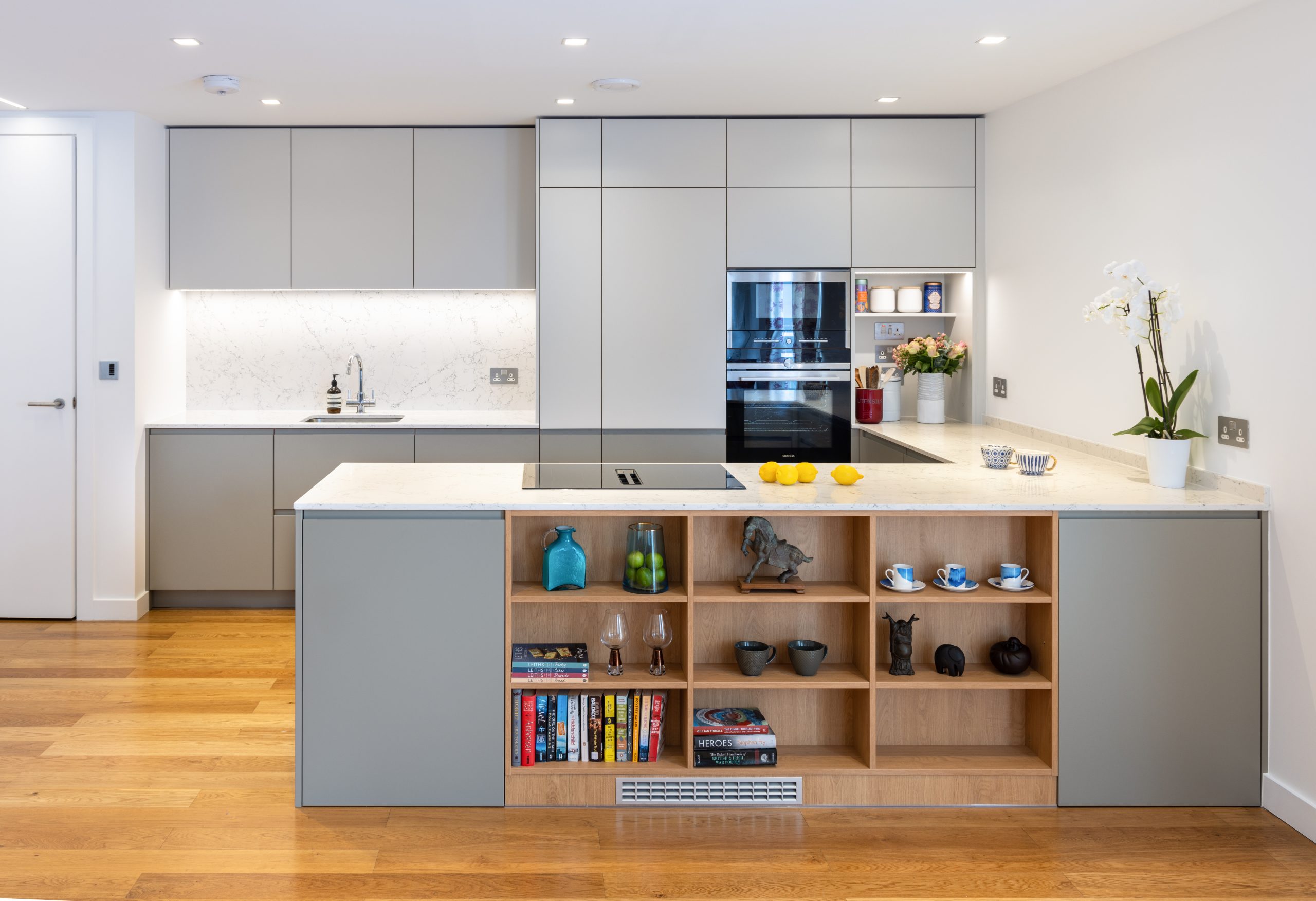 The finished kitchen by Amberth at Micawber Street, London
How To Renovate With A Busy Lifestyle
The most successful projects for senior professionals are those that acknowledge this truth: the home matters, but so does your life around it.
When the client experience is designed with mental bandwidth in mind, the renovation feels supportive rather than invasive. You remain involved where it matters and protected from what doesn’t.
The result isn’t just a better home. It’s a process that fits into your demanding life without quietly draining it.
Considering a Renovation Without the Cognitive Overload?
If you’re planning a renovation and already sensing how easily it could spill into your working life, that instinct is worth listening to.
The right process doesn’t ask you to stretch further. It anticipates decisions, filters noise, and protects your mental bandwidth so your home improves without everything else paying the price. If you’d like to explore a renovation approach designed around clarity, containment, and trust, we’d be happy to talk.
You can get in touch with us to discuss your project or visit our Islington studio in North London to experience our work in person.
FAQs:
Why does renovation stress feel so distracting, even when the project is well planned?
Because renovation stress often comes from cumulative cognitive load, not major problems. Frequent micro-decisions and interruptions quietly fragment attention over time.
Why do senior professionals experience renovation stress more acutely?
Senior roles already demand sustained focus and decision-making. Adding a renovation increases mental bandwidth pressure, even when the project itself is positive.
Is renovation stress mainly a time-management issue?
No. Time can be scheduled, but attention can’t. Renovations drain focus through decision fatigue and constant context-switching rather than hours spent.
Can renovation stress be reduced without being completely hands-off?
Yes. A structured process allows you to remain involved in meaningful decisions while reducing unnecessary noise and project overwhelm.
What role does renovation management play in reducing stress?
Effective renovation management anticipates decisions, resolves issues early, and filters information — protecting focus and improving your overall client experience.
Is it reasonable to want fewer decisions without losing control?
Absolutely. Clear delegation and trust preserve clarity while allowing the renovation to progress without constant interruption.


