

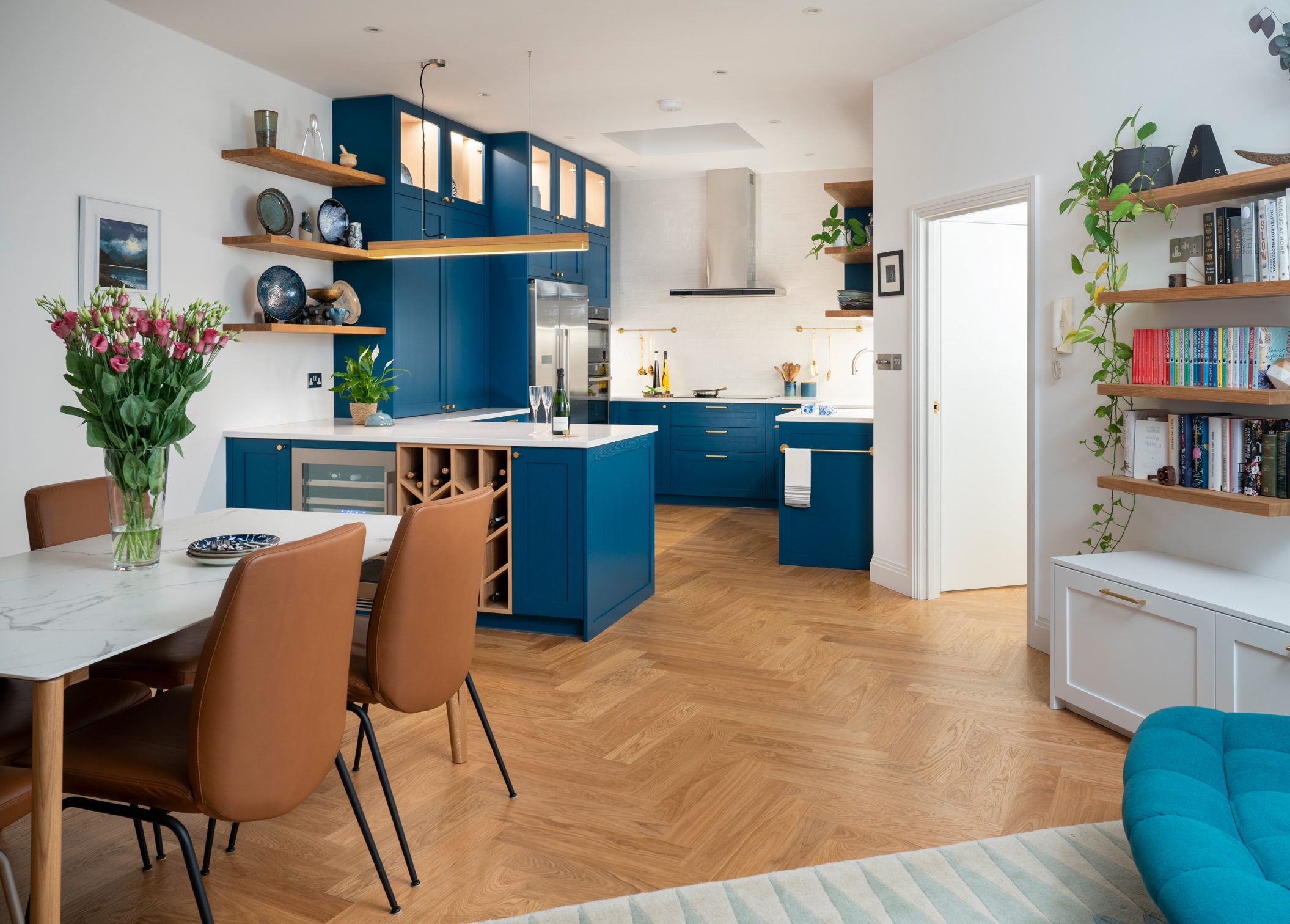
A beautiful kitchen photographs well. A kitchen that works beautifully is composed with intention, where flow, storage, and light are choreographed around how you cook and gather. True luxury lives in the details you feel each day, not merely the ones you admire from across the room.
A lot of kitchen design advice focuses on the visible layers of the room: cabinetry colours, stone worktops, pendant lighting, beautifully chosen taps, carefully sourced stools.
Of course those things matter. A kitchen should feel considered. It should suit the architecture of the home, reflect the people who live there, and feel visually calm and coherent.
But beautiful kitchen design is not quite the same thing as functional kitchen design.
A kitchen can look polished and still feel awkward to cook in. It can photograph beautifully and still create friction on a Monday morning.
The kitchens that feel easiest to live with are usually the ones where kitchen layout planning, storage, lighting and movement have been thought through with the same care as the materials and finishes.
At Amberth, that distinction is at the heart of how we approach bespoke kitchen design.
With 20 years of experience designing, making and installing kitchens for London homes, we’ve found that the kitchens people love most are shaped by dozens of decisions all being resolved properly from the start.
A beautiful kitchen is not always a useful one
Poor kitchen planning reveals itself through a series of small irritations that become part of your everyday.
You might have a striking island, a beautifully veined stone splashback and cabinetry in exactly the right tone, but if the fridge door blocks circulation, the bins are nowhere near the prep area, or there is nowhere sensible to unload groceries, the room will never be as much of a joy in your life as it should.
The extra step to reach the cutlery drawer. The lack of worktop space beside the hob. The toaster that permanently lives in the wrong place because there was never a proper spot for it in the first place.
It’s perfectly possible to create a kitchen that looks exceptional and still misses the mark in use.
The best kitchens are designed around real life
The kitchens that function best tend to begin with questions that have very little to do with aesthetics.
How do you cook? Who uses the room most? Is the kitchen a family workspace, an entertaining space, or both? Do children help themselves to breakfast? Is there always a laptop open on the island?
Good kitchen design is really about understanding daily routines.
A kitchen that suits a keen cook who loves hosting will not be planned in the same way as one designed around school mornings, quick suppers and hiding clutter.
The room needs to respond to the lives happening inside it.
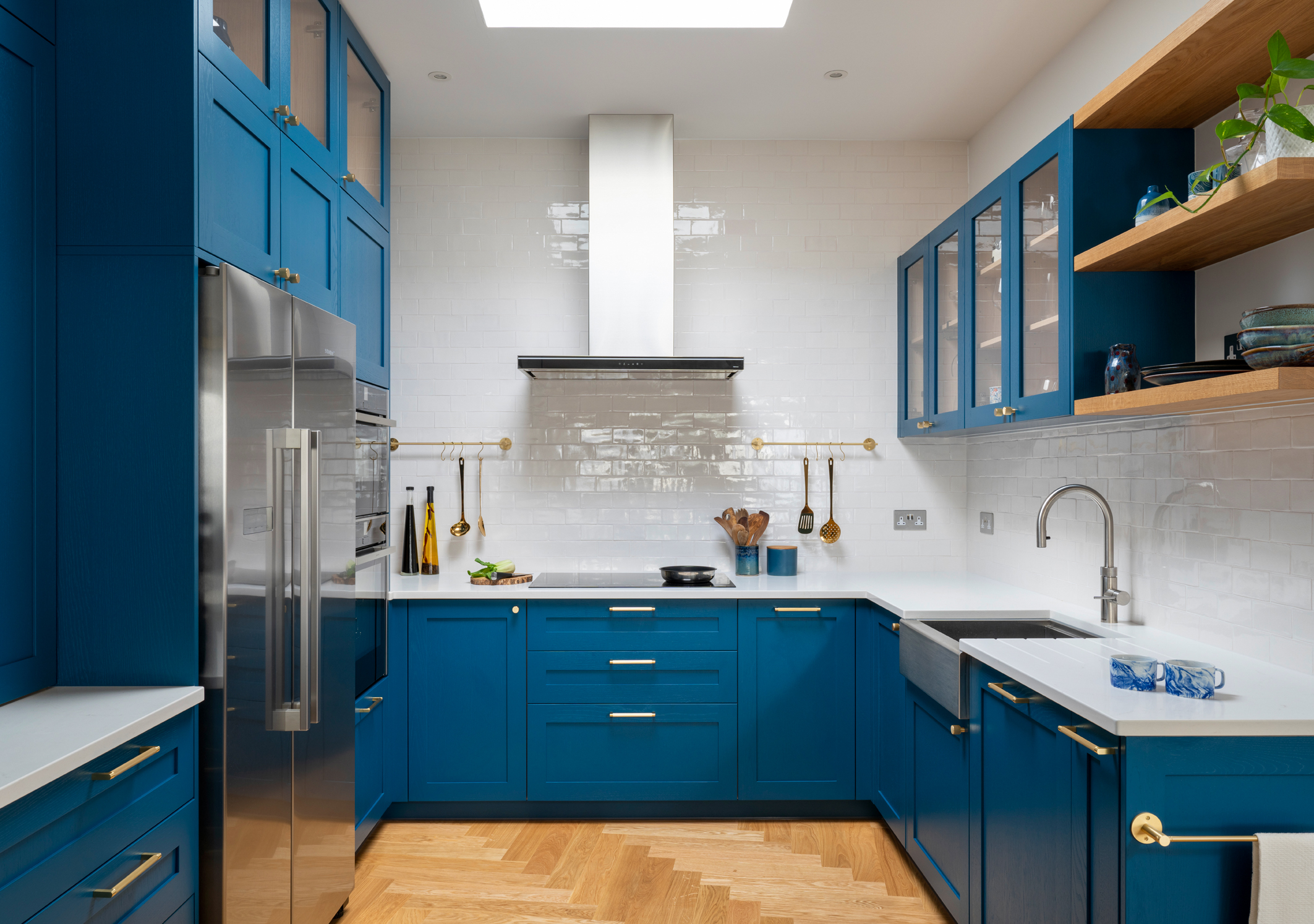 Cotton Barratt project by Amberth – a bright, modern, high-end kitchen in Central London
Layout is where function is won or lost
If there is one place where a kitchen begins to either support or frustrate daily life, it is in the layout.
Good kitchen layout planning is about fitting everything while allowing movement to feel natural. It considers how you move between the fridge, sink, prep area and hob. It thinks about whether doors and drawers can open without blocking one another. It allows enough clearance for someone to cook while another person empties the dishwasher or makes tea.
This is where kitchen zones and kitchen workflow are so important.
Professional kitchen planning guidance reinforces this too. The National Kitchen & Bath Association recommends that a work aisle should be at least 42 inches for one cook and 48 inches for multiple cooks, because circulation and clearance are fundamental to whether a kitchen feels easy to use in practice.
In Amberth’s Cotton Barratt project, that kind of thinking shaped the room from the start.
The design integrated a double oven, hob, built-in drinks fridge, Quooker tap and under-mounted Kaelo wine cooler.
Practical features such as tailored pantry cabinetry, bespoke cutlery drawers and Le-Mans corner storage helped the kitchen function as a hard-working family space, while the overall room still felt calm, streamlined and refined.
Storage should reduce friction, not just hide clutter
Storage is one of the clearest examples of the difference between looking good and working well.
It is relatively easy to create a kitchen with clean elevations and plenty of cupboards. It is much harder to create storage solutions that genuinely support the way your household uses the room.
Where will pans live in relation to the hob? Where should glasses go if people regularly help themselves to drinks while someone else is preparing food? Where do lunchboxes, water bottles and pet supplies need to be if the kitchen is carrying the rhythm of family life?
This is where bespoke joinery can transform the room. It allows storage to be shaped around your real habits.
“Their idea to have a kitchen unit storing all the worktop space-cluttering kitchen appliances has been fantastic… We live in our kitchen and use it heavily. It is the place in our house where we spend most of our time. We could not have chosen a better company to design and install it for us.” – Anna Korycinska
Find the full review and more on our Houzz profile.
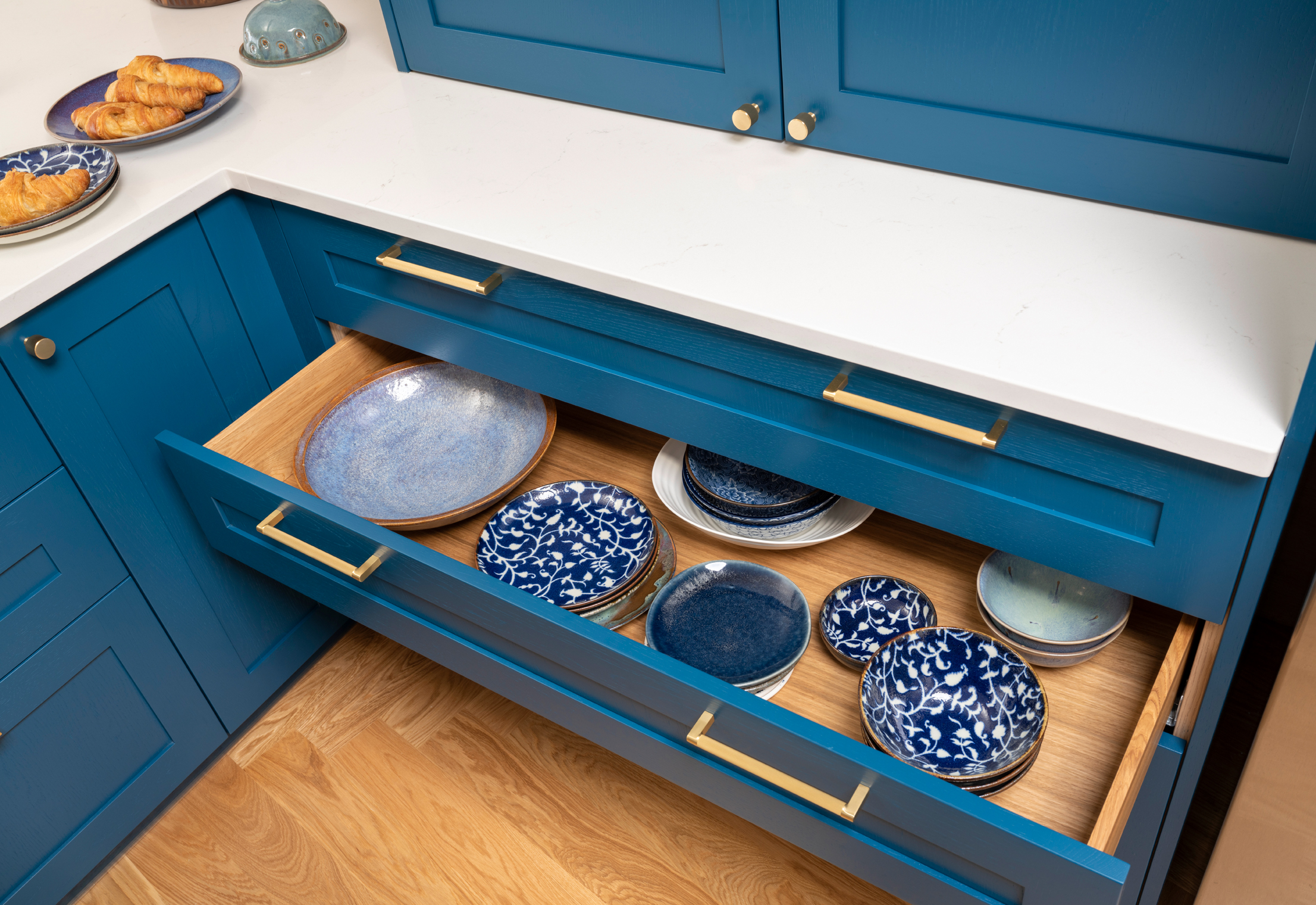 Smart storage solutions matter as much as smart looking fittings
Materials matter, but only in context
A material can be exquisite and still be the wrong choice for a particular household.
That doesn’t mean practical kitchens need to feel stripped back or overly cautious. It simply means material choices should be made with use in mind as well as appearance.
A family kitchen used heavily every day may need a different conversation around surfaces, edges and maintenance than a kitchen used more lightly in a pied-à-terre or entertaining space.
A beautifully aged brass finish might be exactly right in one project and completely wrong in another. The point is not to reduce everything to durability. It is to understand the relationship between the material and the life it is entering.
A kitchen should make your life better.
A beautiful kitchen should absolutely feel special to walk into.
But the kitchens people love most are usually the ones that do more than that. They make cooking easier. They reduce clutter. They support busy mornings. They entertain guests comfortably. They make everyday life easier.
That is the real difference between a kitchen that is simply beautiful and one that works beautifully.
If you’re planning a kitchen and want to think beyond finishes and first impressions, we’d be happy to help. Our approach begins with how the room needs to work, because that is usually what makes it feel resolved in the end.
FAQs
What makes a kitchen functional as well as beautiful?
A kitchen works beautifully when the visual design is supported by strong kitchen layout planning, thoughtful storage, good lighting, sensible appliance placement and materials chosen for the way the room will actually be used.
Why do some beautiful kitchens still feel awkward to use?
Usually because the room was designed with appearance in mind before the practical logic was fully resolved. Poor kitchen workflow, limited worktop space, badly placed storage or awkward circulation can all create friction, even in a visually impressive kitchen.
How important is kitchen layout planning?
It is one of the most important parts of kitchen design. The layout determines how naturally you can move through the room, how easily you can cook, clean and store things, and whether the kitchen feels calm or constantly inconvenient.
Are bespoke kitchens always more functional?
Not automatically, but bespoke kitchen design gives you much more control over how the room works. It allows you to create around the way your household actually lives, rather than forcing everything into a standard template.
What should I prioritise when designing a new kitchen?
Start with how the kitchen needs to function day to day. Think about routines, cooking habits, storage needs, lighting, movement and who uses the space.


