

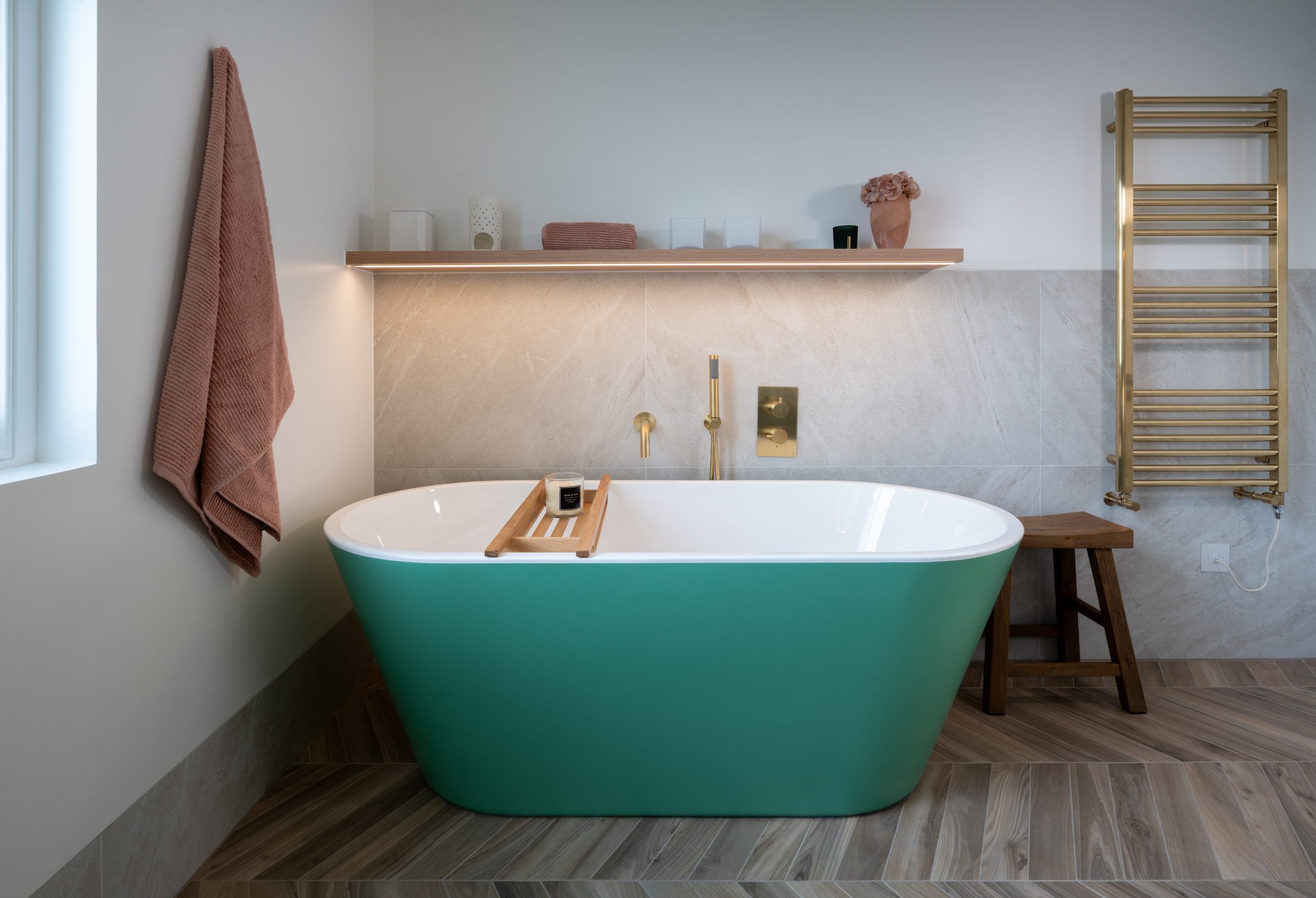
At its core, the best luxury bath is one that suits your lifestyle and looks well-proportioned within the rest of your bathroom.
Choosing a bath starts with how you want to use it, but the right choice also needs to work with your bathroom design and the practicalities of installation.
As a bespoke bathroom design and renovation company in North London, Amberth designs, supplies and installs complete bathroom renovations, which means we consider the bath alongside every aspect of your bathroom: the layout, plumbing, materials and practical requirements of installation.
If you’re choosing a luxury bath for a bathroom renovation, making the right decision at the design stage can prevent expensive compromises later.
That’s why we didn’t want to do another blog on the bathtub 101 basics. Drawing on our experience designing and installing bathroom renovations in North London, we’re looking more closely at the high-end luxury baths available today – and the decisions worth making before you order.
What to consider before choosing a luxury bath for your bathroom renovation?
Baths have come a long way since their origin. Once a purely functional feature, they are now seen as a place to relax, unwind, and invest a little more time in yourself. But choosing the right luxury bath takes more than finding one you love the look of.
These are some of the first things we consider with our clients when deciding which luxury bath to choose:
- How do you like to bathe?
Do you prefer to stretch out and recline, sit upright and feel deeply immersed, or have enough room for two? This helps us consider the right internal length, depth, shape and bathing position for you.
- How do you want your bathroom to feel?
Your bath can set the tone for the entire room, whether you want it to feel warm and cocooning, calm and understated, or more sculptural and expressive. Materials, colours and finishes are considered alongside your tiles, flooring, brassware and cabinetry. This ensures your bathroom feels cohesive and personal to you.
- How will it work within your bathroom?
Your bathtub should feel like it belongs there. We consider the bath’s size, proportion and position alongside your vanity, shower, storage and the space you need to move comfortably around the room.
- What are the functional requirements?
A poorly installed bath is anything but relaxing. That’s why assessing weight, water capacity, taps, plumbing and access into your home is just as important as choosing what style you are drawn to. We consider these practical and installation requirements before you order, from whether the floor can support its weight to whether the bath can actually be brought into the room.
Considering the bath as part of your complete bathroom means you can choose one that feels right to use, looks right in the space, and can be installed as intended.
It can also help to experience different baths in person. At our Islington kitchen and bathroom studio in North London, you can see baths within complete bathroom settings and get a better sense of their proportions and how they feel to use.
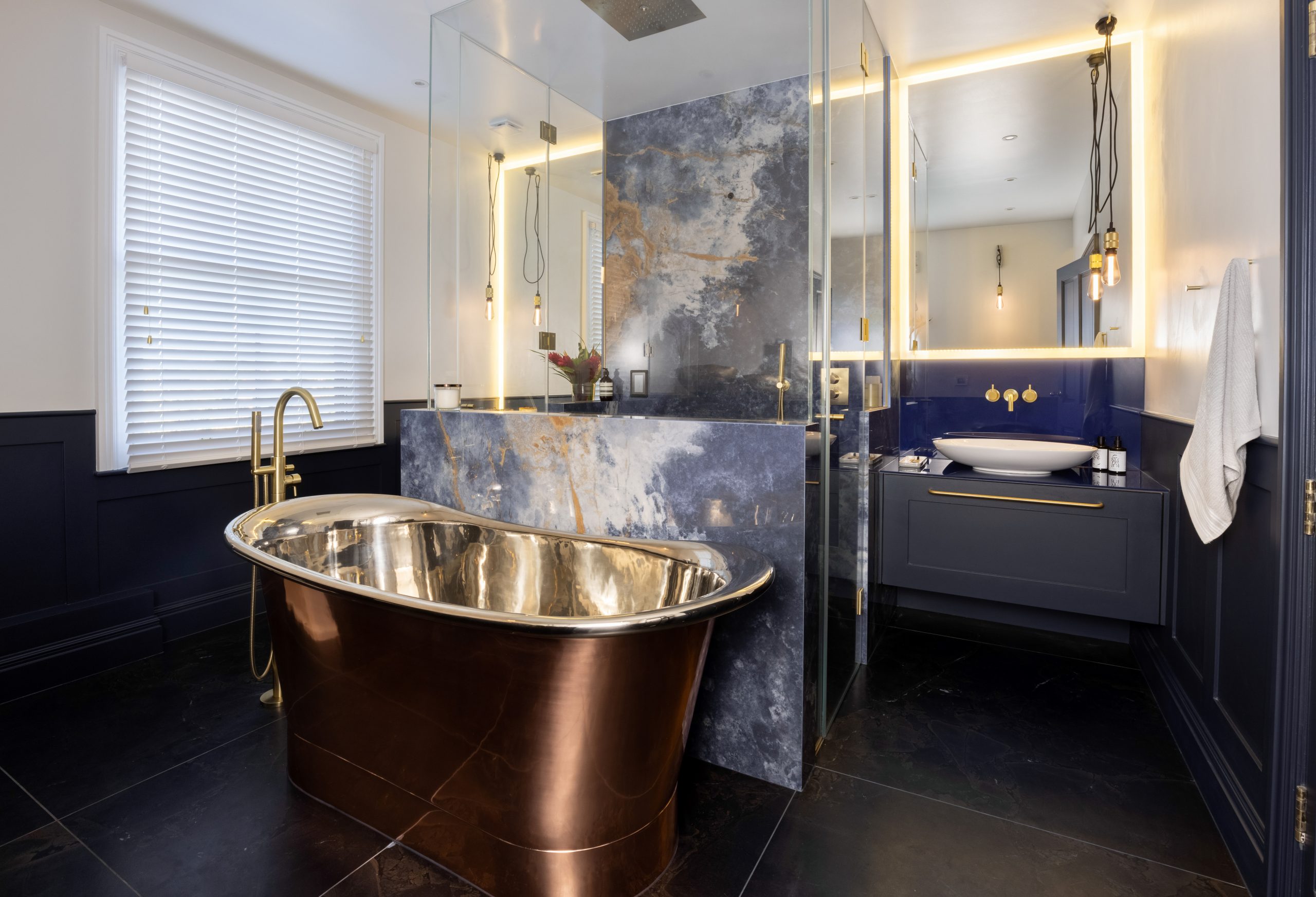
This freestanding copper bath shows how your bathtub can become a focal point, and how careful placement can make your bathroom feel more generous.
Freestanding Baths
Freestanding baths remain one of the most sought-after choices for high-end bathrooms. When positioned well, a freestanding bath can create a quieter focal point and make your space feel like it is designed for complete relaxation. Contemporary designs range from soft, sculptural forms to more traditional silhouettes, allowing them to fit into a variety of bathroom styles.
Consider this if:
You enjoy long, reclining baths and want bathing to feel like an indulgence. A freestanding bath has a sense of occasion to it. Particularly if you like the idea of the bath becoming a beautiful focal point rather than simply another fitting in the room.
Our approach:
Before you settle on a freestanding bath, we look at how it will work within your complete bathroom layout. We consider how much space you will have to move around it, how easy it will be to clean, and whether its position compromises your vanity or storage. It is important to resolve the taps, plumbing, and maintenance access before you order to ensure that your bath will not only be a pleasure to use, but easy to maintain.
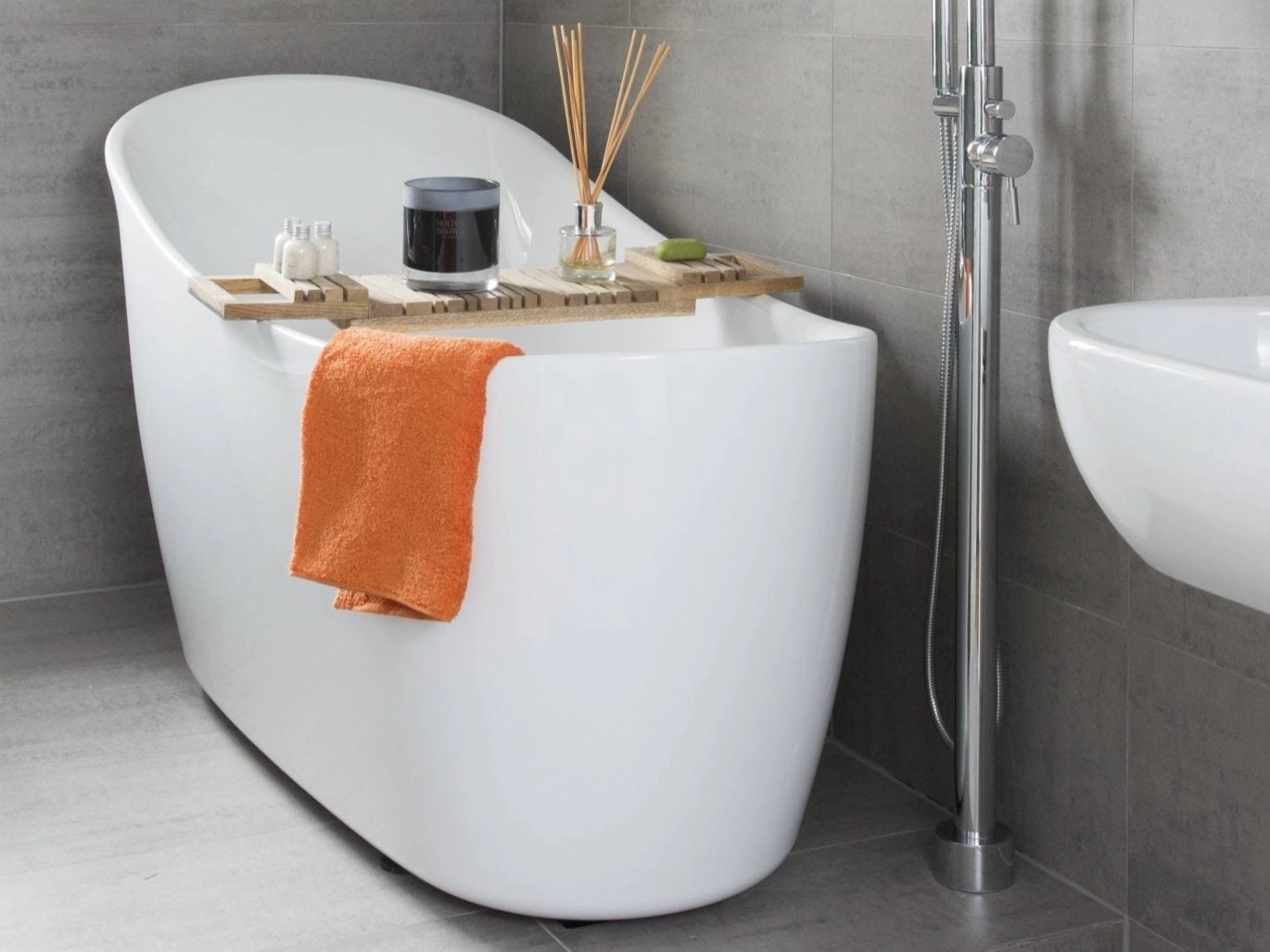
In our bathroom project in Canonbury Road, we installed a Japanese-style soaking bath, making efficient use of the available floor space without compromising on luxury.
Japanese-inspired soaking baths
Influenced by the traditional Japanese ofuro, Japanese-inspired soaking baths are deep, softly curved, and great for a completely immersive bathing experience without requiring a lot of length. Steeped in Japanese tradition, this bathtub is a statement piece in its own right.
Consider this if:
You prefer the feeling of sitting upright and being deeply immersed in warmth rather than lying back and stretching out. The deeper bathing position can feel particularly enveloping, while the shorter footprint can appeal if you want an immersive bathing experience without a long bath dominating the room.
Our approach:
Before you choose this bath, make sure you are comfortable with the higher sides and how you will get in and out. Before settling on this choice, we would also check its capacity against your home’s hot water provision, as a deep bath can require more water than its compact size suggests. Its filled weight and position are considered at the same stage, so that you know what living with the bath will actually involve before you commit to it.
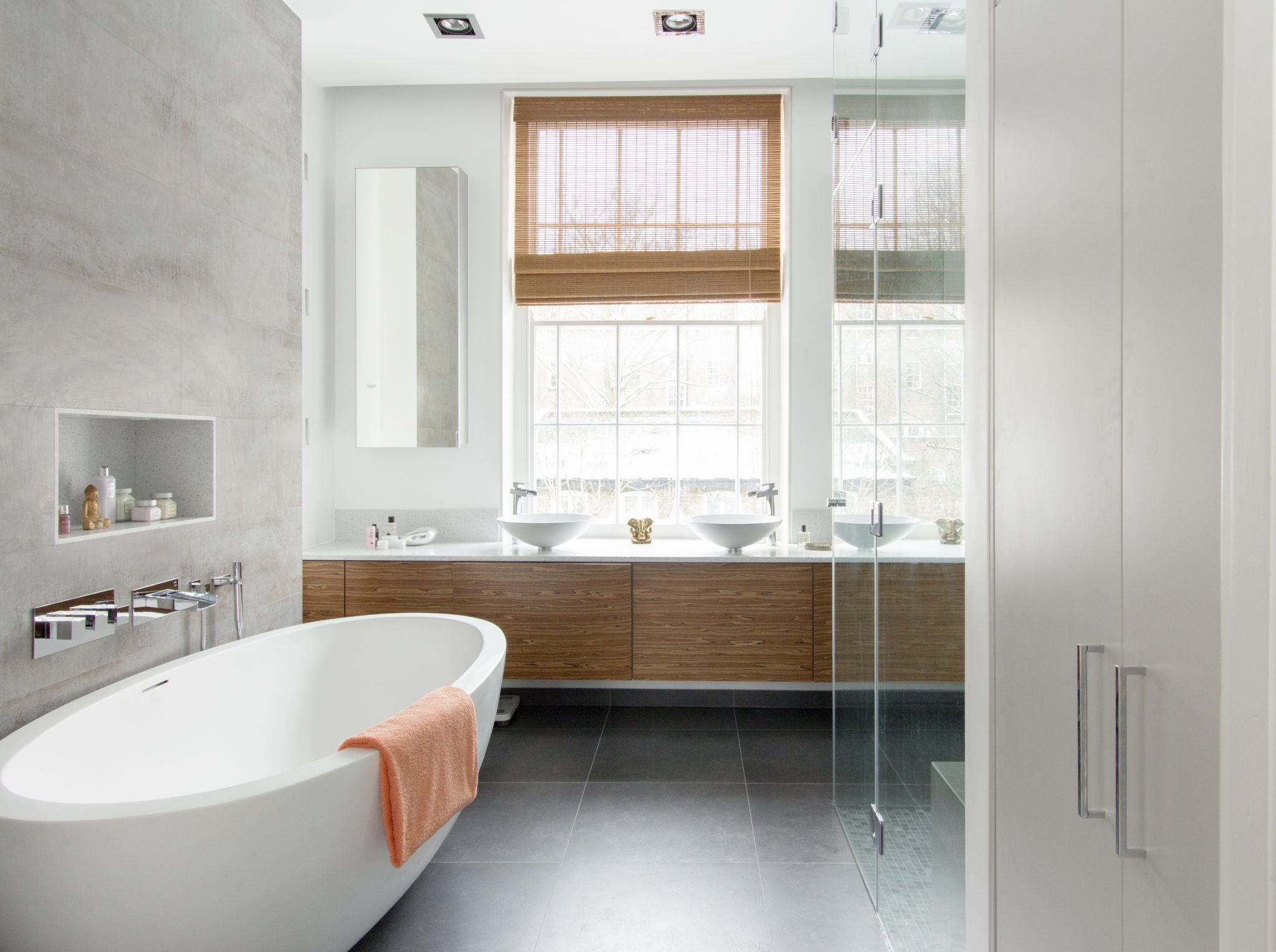 Stone and stone composite baths, like the one you see in Amberth’s bathroom design in Liverpool Road, are known for very good heat retention, durability and luxurious feel.
Stone and stone-composite baths
Stone and stone-composite baths add visual interest to your bathroom with texture and a substantial, architectural quality. Their quieter, more tactile appearance can work particularly well where natural materials form an important part of the wider interior.
Consider this if:
You are drawn to the tactile quality and solidity of natural-looking materials. Stone and stone-composite baths can create a particularly grounded, restful atmosphere, especially in bathrooms where texture and earthy materials are central to the design.
Our approach:
Before you order a stone or stone-composite bath, we check more than whether it fits your bathroom. We consider its weight and whether your floor can support it, as well as how the bath will physically reach the room. In a London home, narrow doorways, staircases or landings can make access just as important as the dimensions on the plan. Checking this early means you are not left with an expensive bath that cannot be installed as intended.
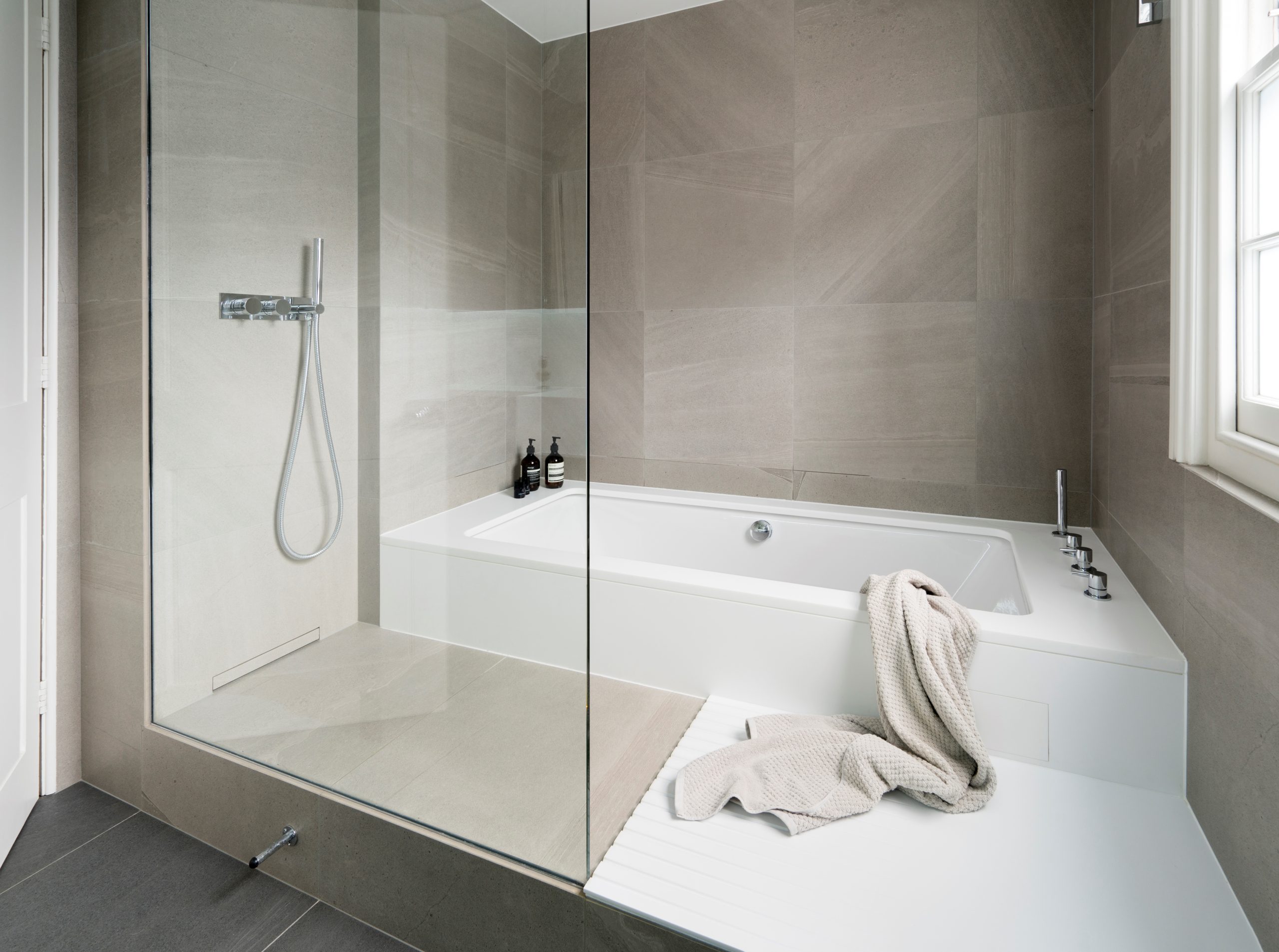 A built-in bath integrated alongside the walk-in shower, creating a cohesive bathing zone within this Amberth bathroom project in Yardley Road, London.
Sunken and built-in baths
Sunken and built-in baths feel like a part of the architecture. By setting the bath into the floor or surrounding structure, your chosen finish can continue around it. This offers a more integrated look than freestanding designs.
Consider this if:
You want bathing to feel like a genuine escape at the end of the day. A sunken or built-in bath can create a more intimate, enveloping experience, giving you somewhere to slow down. Switch off. And feel completely at ease.
Our approach:
If you are considering a built-in or sunken bath for your new bathroom, we plan the bath and its surrounding structure together. We look at how comfortable the finished height will be for you to get in and out, while resolving the support, waterproofing, drainage, and future maintenance access before construction begins. That way, you can achieve the clean, integrated look without creating practical problems behind the finishes.
If you are planning a complete bathroom renovation, explore Amberth’s bathroom projects to see how we approach the room as a whole.
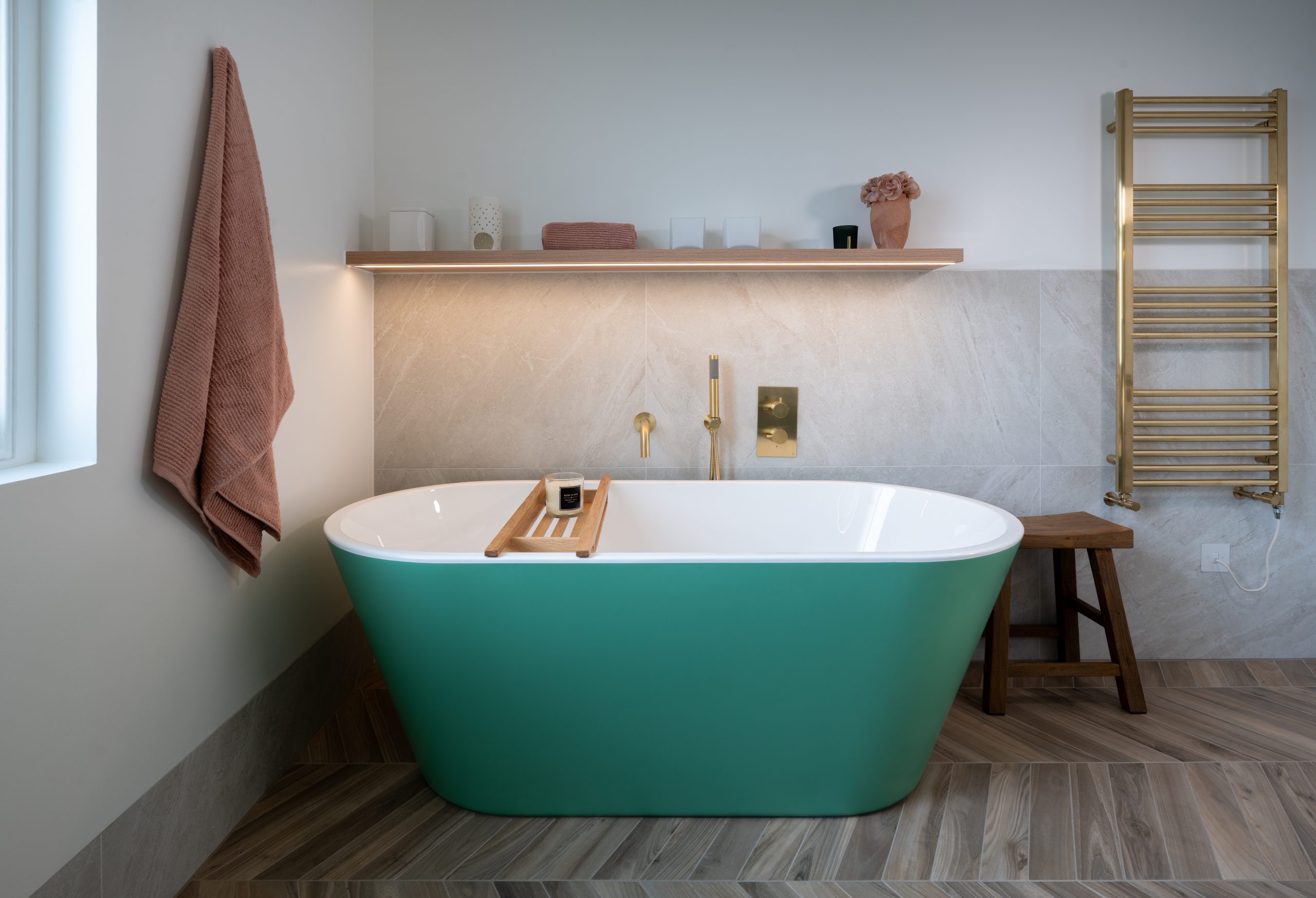
A double-ended, freestanding bath creates a comfortable place to stretch out while sitting naturally within the wider design.
Double-ended baths
Unlike a single-ended bath, a double-ended bath has two sloping ends, with the taps and waste positioned centrally. This creates a more symmetrical look and gives you greater flexibility in how you use the bath. Available in both freestanding and built-in designs, they can work particularly well where you want the bath to feel generous without compromising the wider bathroom design.
Consider this if:
You want to properly stretch out, settle in and stay for a while. The freedom to recline at either end – or share the space comfortably – can make bathing feel less like part of your routine and more like a quiet moment intentionally taken.
Our approach:
If you want a generous double-ended bath, we look beyond the largest size your bathroom can physically accommodate. We show you how different sizes affect the space you have for your vanity, storage, and comfortable movement around the room. You can then decide whether those extra centimetres inside the bath are worth the trade-off, or whether a slightly smaller bath will make your bathroom feel more generous overall.
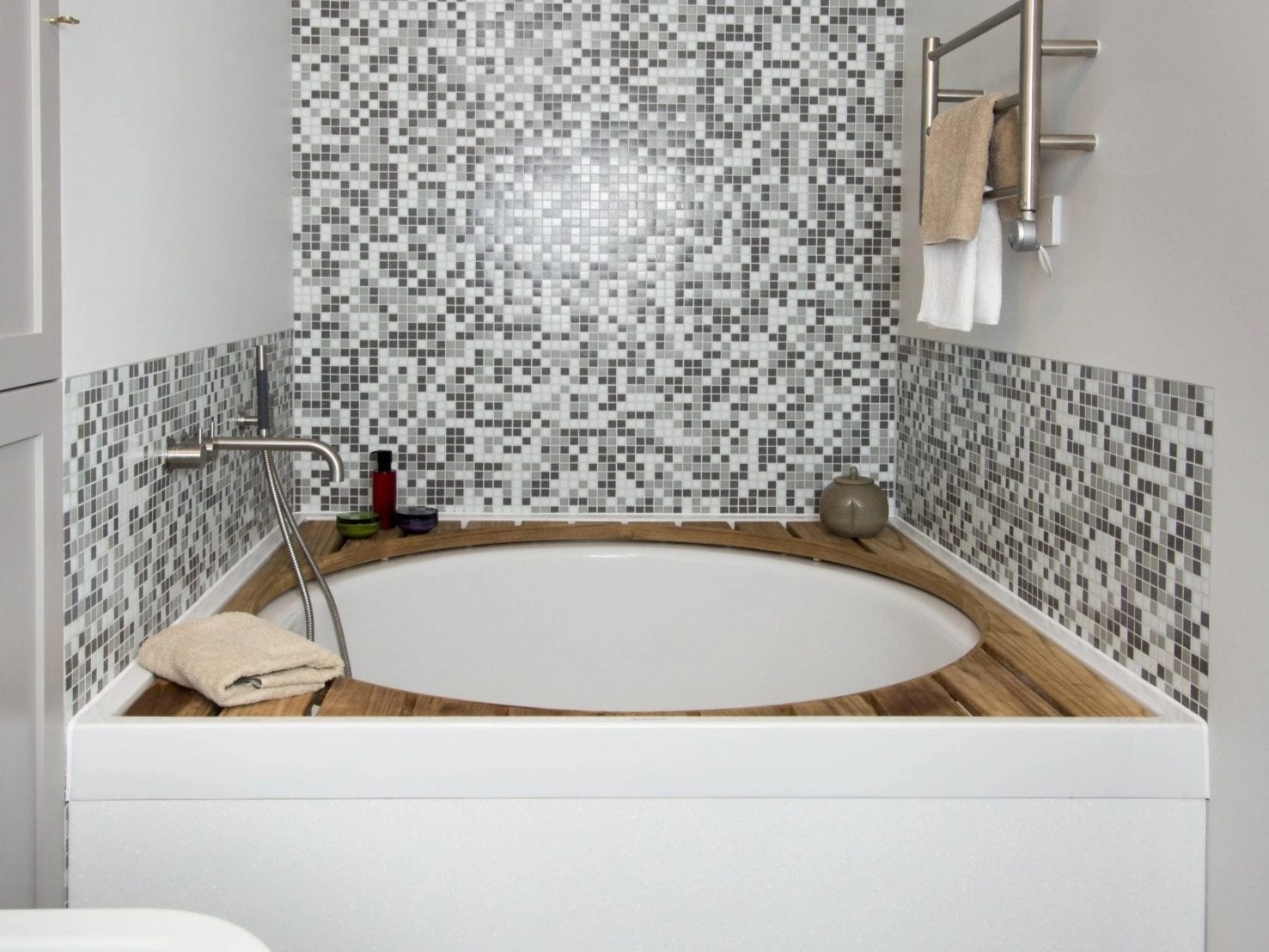 A bathroom design by Amberth in Bourdon Street with a timber-framed inset bath, mosaic tiles and heated towel rail creates a warm, spa-like bathing area.
Inset baths
An inset bath is fitted within a surrounding structure rather than standing independently in the room. The surround can be finished in timber, stone or tile, giving it that signature spa-like appeal and helping the space feel warmer and more enclosed.
Consider this if:
You want your bathing area to feel warm, private and all-encompassing rather than open and sculptural. If you enjoy making your bath time an occasion, the practicality of having everything you need close by can make it feel more like a place to retreat to at the end of the day.
Our approach:
Before we design an inset bath around you, we consider what you want within reach while you are using it – whether that is somewhere for a book or glass, discreet storage for toiletries or a warm towel close by. We use this to plan your surround, storage, lighting and towel position, while resolving waterproofing and maintenance access behind the scenes. The result should feel effortless to use.
Which luxury bath is right for your bathroom?
It is easy to assume that the first bath to catch your attention is the right bath for you. But proportions, position, materials, and installation are equally as important as how beautiful it will look in your space.
These decisions require a little more consideration than personal preference. At Amberth, we start by understanding what you want from your bathroom, your daily routines, and what you want to get out of your space.
You may arrive knowing exactly which bath you love. Or you may know how you want your luxury bathtub to feel, but not yet know how to achieve it.
Because Amberth works across bathroom design, supply, and installation, we can resolve these decisions as part of your wider bathroom renovation. Make sure your bathtub is right for your lifestyle. And keep the installation process seamless and stress-free.
FAQs
How much space should you leave around a freestanding bath?
There is no single rule because it depends on the bath, room and surrounding fittings. Allow enough space for comfortable movement, cleaning and access to taps and other fixtures. At Amberth, we assess these clearances as part of the complete bathroom layout rather than considering the bath in isolation.
Can you install a freestanding bath in a small bathroom?
Yes, if the proportions work. Compact freestanding baths can create a focal point without overwhelming the room, but circulation, cleaning access and the position of taps still need careful consideration. In some smaller bathrooms, a built-in bath may make better use of the available space.
What is the most comfortable type of bath?
Comfort depends on how you prefer to bathe. A double-ended bath can provide more room to recline, while a Japanese-inspired soaking bath suits people who prefer to sit upright and immerse themselves more deeply. Where possible, consider the bath’s internal dimensions and bathing position rather than choosing on appearance alone.
Can a heavy bath be installed in any bathroom?
Not necessarily. The weight of the bath itself, its filled weight and the construction of the floor may all need consideration. This is particularly important with heavier materials, and the requirements should be established before the bath is ordered and installed.
Should I choose my bath before designing the rest of the bathroom?
When choosing a luxury bath as part of a bathroom renovation, it should ideally be considered alongside the complete bathroom design. Its dimensions and position can influence plumbing, taps, circulation, flooring and the placement of other fittings. Resolving these decisions together reduces the risk of compromises later in the project.
Is a bath worth including if I mostly shower?
Only if it adds genuine value to the way you use your bathroom. If you rarely take baths, allocating more space to a generous shower, storage or improved circulation may suit you better. Amberth’s approach is to design around how you want to live with the room, rather than assuming every high-end bathroom needs a bath.


