


A bathroom renovation may take anything from four to ten weeks once construction starts, but the full timeline starts well before work begins on site. Design, specification and ordering can add four to 14 weeks beforehand, particularly for a bespoke bathroom. Because there are technically two timelines to be conscious of, knowing what happens before and during construction gives you a clearer sense of when you can expect to step into your finished bathroom.
Embarking on a bathroom renovation is exciting, but it can also cause a lot of anxiety. How long will it take? What will be the extent of the disruption to our lives? What about delays? And did we just say there are two timelines?
There’s a lot to consider, and sometimes it can be difficult to know where to begin. If this is how you’re feeling, why don’t you make an appointment to come speak with our team in person? We’ll be able to answer all your questions.
Knowing what to expect at each stage of your renovation can ease much of that uncertainty, helping you feel prepared for what’s ahead and positive about the bathroom waiting for you at the end of it.
How Long Does A Bathroom Renovation Take From Design To Completion?
As mentioned, a bathroom renovation has two timelines to consider: the overall project programme and the time your installation team is actively working on site.
Before construction begins, you’ll need to allow between four and 14 weeks for design, specification and ordering. These stages can overlap, with ordering progressing alongside other pre-construction preparations.
Once construction begins, the on-site renovation typically takes around four to 10 weeks. The duration depends on several factors, including design complexity, materials used, bespoke elements, scope of work and any unforeseen issues discovered once work begins.
But what exactly is involved in those timelines, you may be wondering? What needs your involvement? How disruptive will this become? And what factors can push the construction phase towards the 10-week mark? Let’s break it down in a little more detail.
What happens before the renovation starts – Planning and Design: 4-7 Weeks
This phase is arguably one of the most important stages of your whole renovation, and it’s one we’d advise you don’t rush. Spending time planning the layout, confirming specifications and agreeing the programme before any work starts on site can save a lot of pain later on.
Getting those decisions right takes a different amount of time for every project, so the exact duration will depend on the scope of your renovation and your own decision-making process.
This is also when your design team gets to know you. At Amberth, we’ll want to understand your daily routines, how you use the space, what currently frustrates you and how you want your new bathroom to feel. Even the colours, textures and materials you’re drawn to can help us shape a bathroom that feels considered around you, rather than simply designed for the space.
You’re also going to want to understand what life will look like while your bathroom is being renovated. If it’s your only bathroom, where will you shower? Will you be living at home throughout the works? Are there particular days when you need the house to be quiet for work or family? These details matter because they shape how your renovation is planned, helping you understand what the coming weeks will mean for your household before you commit to the programme.
If you’re wondering whether you’ve thought of everything before work begins, Houzz’s guide to planning a bathroom renovation covers some of the practical design questions worth considering early.
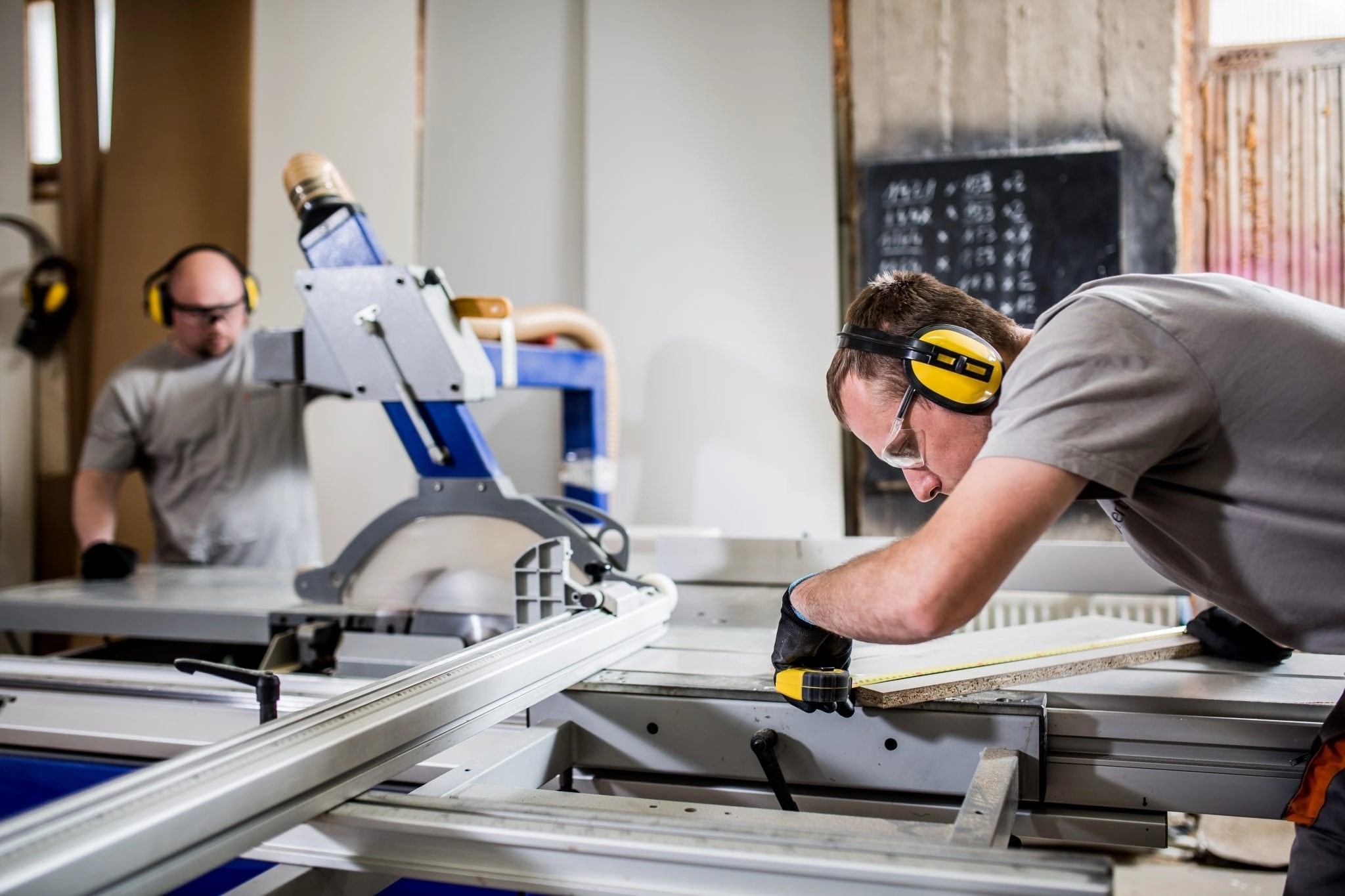
What happens before the renovation starts – Ordering Materials: 2-8 Weeks
Once the design of your bathroom is finalised, your next step is to order materials. The person responsible for ordering materials depends on the team you’re working with. When you decide to have Amberth manage your bathroom renovation, you’ll have a dedicated project manager there from the first phase through to the last to take care of exactly this. This means you can enjoy the process without having to coordinate orders and keep track of deadlines.
It’s important to note that bespoke or special-order items can extend this phase. And lead times can vary greatly, with some items taking up to 8 weeks to arrive. If you’re interested in having bespoke features in your bathroom but you’re unsure what that entails, take a look at our blog on bespoke design vs off-the-shelf.
These stages don’t always happen entirely one after another, either. Ordering and delivery periods can overlap with other pre-construction preparations, with the on-site programme scheduled around confirmed lead times.
It can sound like a lot of moving parts, and feel overwhelming to keep up with. But when ordering, deliveries and the wider programme are being coordinated for you, you’re free to enjoy seeing your bathroom come together rather than keeping track of what needs to arrive and when.
The Installation Phase: What Order Will Your Bathroom Be Renovated In?
Site Preparation: 1 Day
It might sound simple, but prepping the site properly is essential if you want a clean and efficient project. Your professional installers should cover adjacent areas to help minimise dust and protect your home. It’s also the best way to make sure your home stays as undisturbed as possible – something that will become increasingly important to you as your renovation progresses.
A great resource for you if you’re feeling particularly unsure about the installation process, is our blog: What a Well-Managed Renovation Installation Process Actually Looks Like.
Demolition Day: 1-3 Days
Within a period of one to three days, your bathroom will completely transform. Tiles will be lifted, fixtures taken down, and unnecessary walls removed. This stage can feel both exciting and overwhelming. For the first time, you can see your renovation plans in action before your very eyes.
For most bathroom projects, demolition can be completed in a couple of days, but larger spaces or complex configurations may take longer. Amberth handles the installation process of all our projects, too, and we’re good at keeping your space clean as we go.
This is often when the renovation feels most disruptive. Losing access to your toilet or shower can make three days feel much longer, especially if it’s your only bathroom.
Your project manager will suggest practical alternatives, such as a temporary WC or access to another bathroom, before work begins. You can feel comfortable knowing your essential needs have been considered.
Plumbing and Electrical Work: 2-8 Days
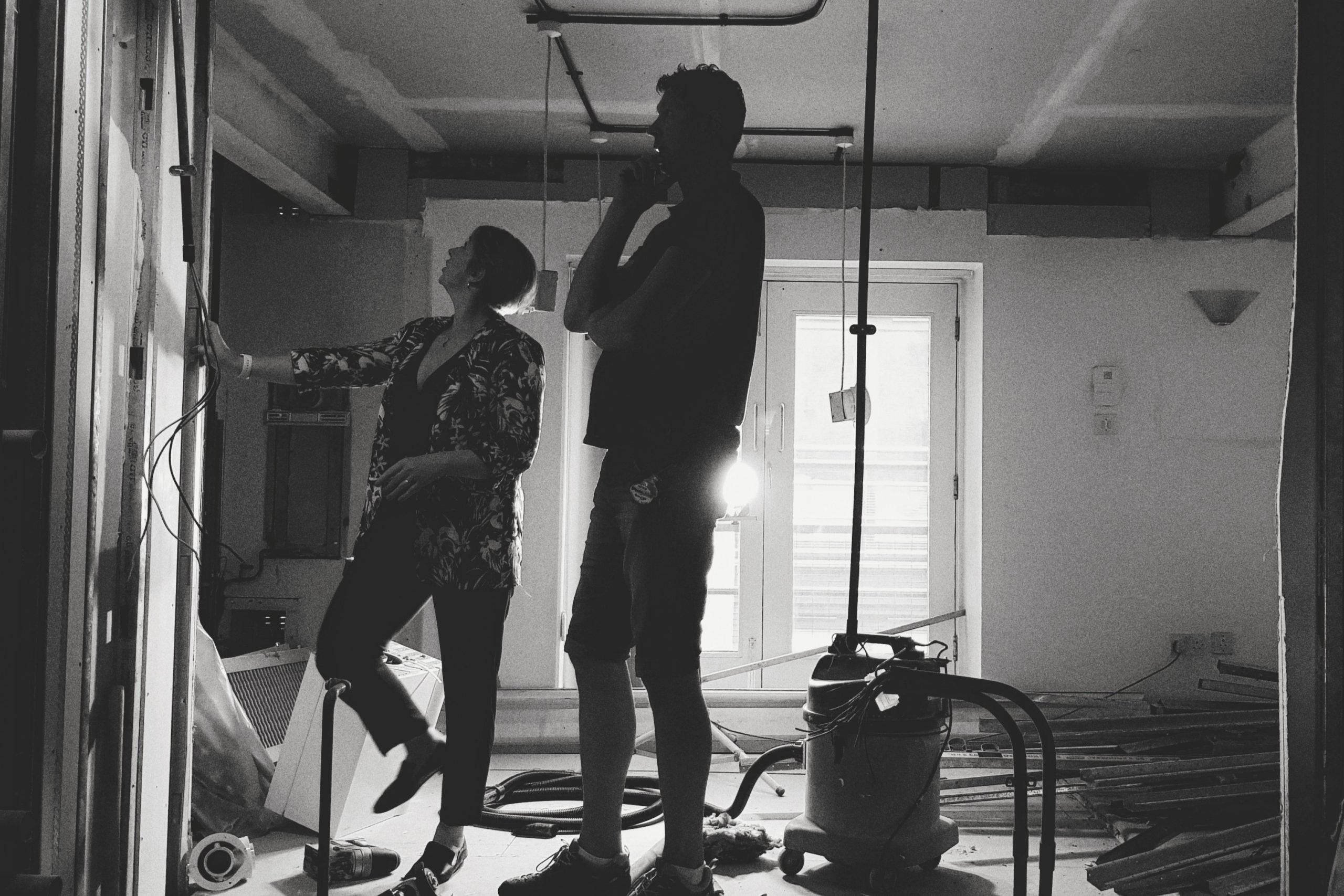
It’s often the unseen work that ends up being the most important. After demolition, contractors begin rerouting plumbing, moving pipes, and updating electrical points. This process takes precision and care, especially when there are significant changes to your bathroom’s layout.
This stage can involve noisy work and planned interruptions to water or electricity. While there is no way to avoid the way this might impact your day, your project manager will be able to ensure you’re as informed as possible. They will coordinate the trades and give you notice on what is planned, so you can arrange your day around the work rather than being caught off guard.
Wall Preparation and Tiling: 5-10 Days
Once the foundational work is done, your walls can be prepared, plastered and waterproofed, along with any repairs. Once this is done, tiling can begin.
Depending on the size of your space and the complexity of the tile pattern, this stage can take between five and ten days. The programme also needs to allow for adhesives and grout to dry properly, so some parts of the process simply cannot be rushed.
Tiling can also mean several days of cutting, dust and limited access to the room. There may also be quieter periods while waterproofing, adhesives or grout cure, when the room needs to remain undisturbed even though little visible progress is happening.
Fixture Installation: 2-6 Days
Next, it’s time to install your sinks, toilets, bathtubs and showers. Now, your bathroom starts to feel less like a construction site and more like the space you imagined, as the layout you’ve spent weeks planning finally begins to take shape around you.
While the work on site may only take a few days, this stage can span longer when your bathroom includes bespoke elements. Joinery can take up to six weeks to fabricate, while made-to-measure glass can take around 14 working days.
There may be quieter periods while bespoke pieces are being made and delivered, and even once installed, connections, testing and finishing work may still be needed before the bathroom is ready to use. Knowing this in advance means those quieter days don’t feel like an unexpected pause, but can offer a welcome breather from the activity before the next stage begins.
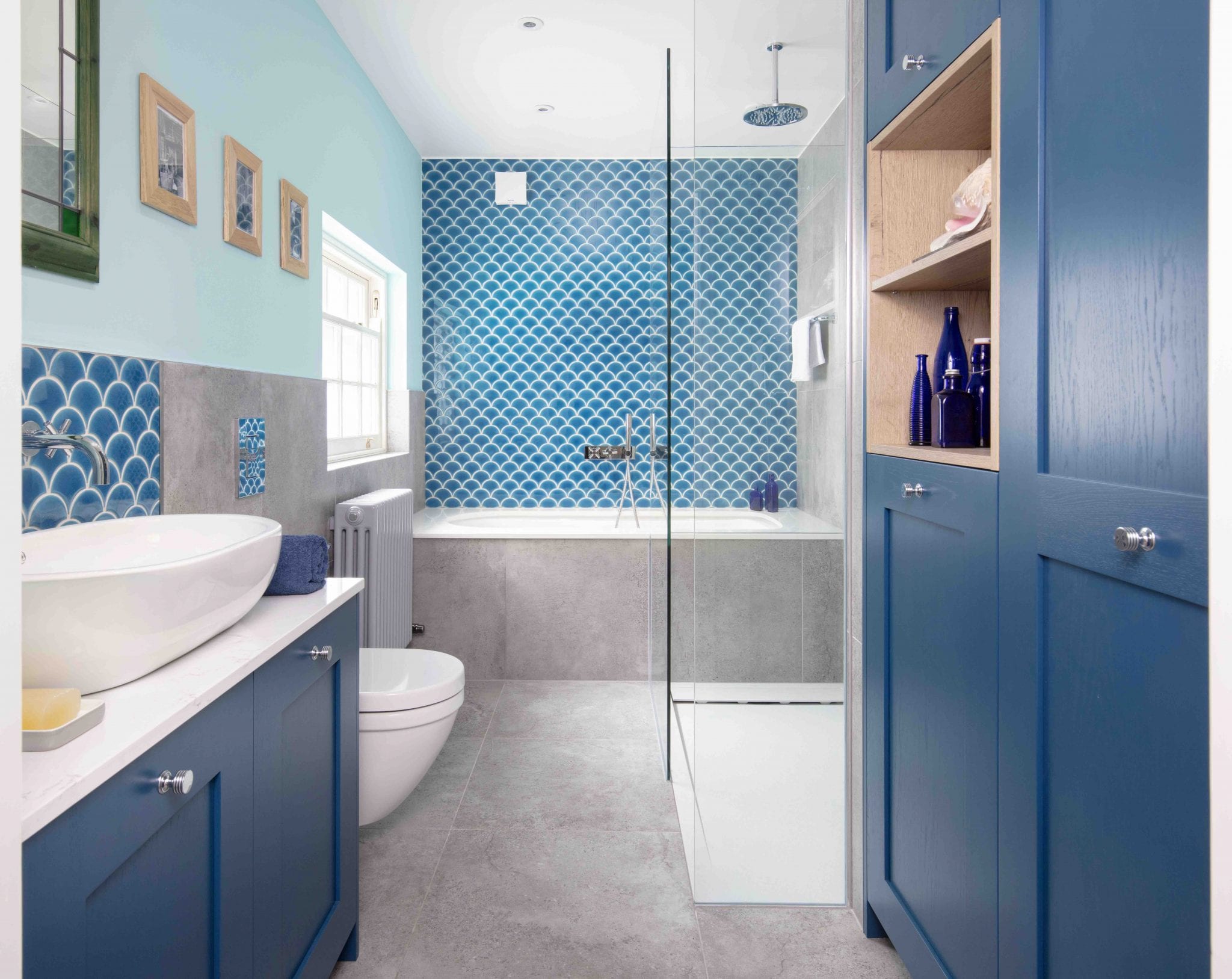 Victorian Bathroom Renovation done in Southgate, London, by Amberth
Painting and Finishing Touches: 2-5 Days
By this point, your bathroom is becoming a space with colour, texture, and cohesive design. Walls are painted, mirrors installed, shelves hung, and all the finishing touches are added.
Amberth is well-versed in creating a high-end feel through the details. You can see a beautiful representation of this in our De Beauvoir project, where intentional features were used to add focal points within a minimalist design.
This stage is usually less disruptive than the earlier building work, although trades may still need access, and finishes need time to dry.
With the finishing touches in place, you’ll naturally be eager to start enjoying your new bathroom. But before it’s completely yours to enjoy, there’s one final step to complete.
Final Inspection and Clean Up: 2-3 Days
Before the renovation is officially complete, your project manager will do a final walk-through. We’ll check everything from layout to fixtures and feel, making sure it meets our standards, and most importantly, yours.
If there are any adjustments or touch-ups to be made, our team will see to them right away, after which the space is given a top-to-toe clean. Now, after weeks of planning and watching your bathroom take shape, you can finally step inside, slow down and enjoy the space you’ve been looking forward to.
Why It’s Important To Maintain A Flexible Timeline
While careful planning and preparation can avoid many renovation delays, it’s important to be aware that unexpected situations can still arise. Our Southgate Road project is a good example of why bathroom renovation timelines need flexibility.
During construction in this Victorian home, hidden uneven floor levels and structural challenges only became apparent once work had begun. Because the project had been carefully planned and coordinated from the outset, our project manager worked closely with the structural engineer and contractor to adapt the approved design without compromising the overall vision.
Discovering something unexpected once work is underway can be unsettling. Suddenly, there’s another specialist to bring in, trades to reschedule and decisions to make about how the programme moves forward.
When your renovation is being managed for you, you don’t have to carry that coordination yourself. You can have confidence in knowing who is dealing with the problem, what needs to happen next and how the rest of your project will move forward.
If this sounds like the kind of experience you’d like for your own project, we’d love to hear what you have in mind. The best place to start is by filling out our contact form, and a member of our team will be in touch to talk through your project with you.
FAQs
Why is it important to have a bathroom renovation timeline in place?
It is highly recommended that you have a structured bathroom renovation timeline in place. Without it, unforeseen challenges and disruptions can cause delays and set unrealistic expectations. Knowing what order to renovate your bathroom in can alleviate the uncertainty around how your life will be affected over the renovation period.
What’s the biggest cause for delays in a bathroom renovation?
The most common causes of delays are late design changes, specialist product lead times and unforeseen issues that only become visible once the existing bathroom has been removed. Older properties, in particular, can reveal structural or plumbing challenges that need to be resolved before work can continue.
Can I use my bathroom during the renovation?
In most cases, no. Once demolition begins, the bathroom will usually be out of use until the new sanitaryware has been installed and commissioned. If it’s your only bathroom, it’s worth discussing temporary arrangements before work starts so you know exactly what to expect.
How can I help keep my bathroom renovation on schedule?
One of the most effective ways is to make key design decisions before construction begins. Confirming layouts, fixtures and finishes early helps reduce changes during the build, allowing trades to work from coordinated information and keeping the project moving efficiently.


