


Any bathroom can look expensive in a photograph. The real test is an ordinary weekday morning, when you are running late and everything simply needs to work.
What makes a bathroom feel expensive is not the price of the materials. It is how effortlessly the room works, how carefully the details meet, and how it feels to use every day.
After more than 20 years of designing, supplying and installing bathrooms across London, these are the seven details we have learned matter most.
A bathroom feels expensive when using it is effortless.
The shower control is where your hand naturally expects it. Towels have somewhere to go. The mirror is properly lit. Storage keeps the worktop clear. The room is warm when you step into it.
None of those details has much impact in a showroom photograph. Together, they change how your room feels to live in every single day.
1. Get the proportions right before you spend more on materials
A beautiful freestanding bath will not rescue a room that looks crowded. Nor will a high-priced vanity make a narrow walkway feel generous.
One of the most valuable things you can spend money on is often the space itself. How much room you leave around the bath, how comfortably you can enter the shower, where the door swings, and whether the main pieces are properly scaled to the room.
At Canonbury Road, our client had two priorities. A walk-in steam shower big enough for two and a deep bath to sink into at the end of the day. The original room could not hold both. So we borrowed part of the neighbouring bedroom and the bathroom became a bathing room.
The luxury came partly from the products, but more importantly, it came from having enough space to enjoy them.
That is why we usually solve the layout before getting attached to a particular bath, basin or shower. Getting those decisions right early also means fewer difficult choices and costly changes once work is underway.
2. Luxury bathrooms feel calm because the details line up
This is one of the things people often struggle to identify. They walk into one bathroom, and it looks beautifully resolved. Another contains equally high-quality products, yet the overall design feels busier.
Often, the difference is in details that are rarely glamorous enough to make the moodboard. They are also some of the first things you notice when they are wrong.
At Southgate Road, the junctions between the bath surround, tiling and shower glass were carefully considered so that each element felt part of the same design.
Luxury lives in those junctions.
 Carefully considered junctions and joints to create an expensive look and feel at the Southgate Road Project by Amberth.
3. Use better materials where you actually touch and see them
A high-end bathroom does not need every surface to be the most costly material available. In fact, using too many statement finishes can have the opposite effect. We favour a restrained palette of carefully selected materials that work together.
Our Luxurious Modern Bathroom is a good example. The room is relatively compact, but a wenge veneer vanity, quartz bath surround, brushed brass fittings, large-format porcelain and subtle brass detailing give it depth without making every surface compete for attention.
The restraint matters. A bathroom can contain expensive materials and still feel poorly considered if none of them seems to belong with the next.
4. Good lighting changes the room more than another statement finish
Lighting is not something we add at the end. We plan it from the first drawing: bright enough for the morning rush, soft enough for a late bath.
Bathroom lighting needs to serve several different purposes throughout the day. Natural light, where available, also changes how every material and colour behaves.
Think about how you use the room. Where you stand to get ready in the morning, whether you prefer a softer light in the evening, and how the lighting should feel when you want to unwind.
These small decisions make the bathroom feel like your own, rather than a room designed simply to look beautiful. Good lighting is not about adding more fittings. It is about having the right light at the right moment.
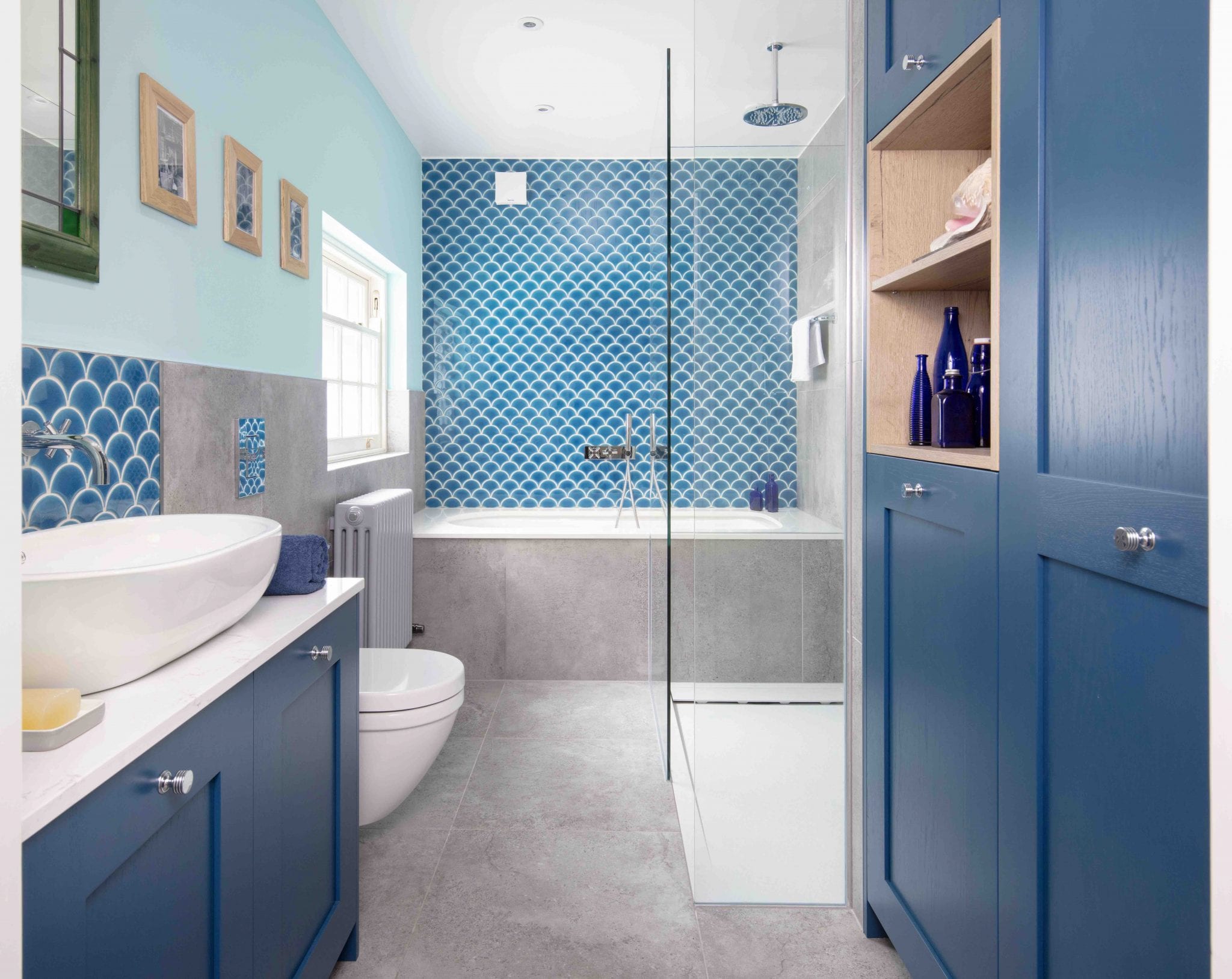
 Thoughtful lighting and storage solutions in a bespoke modern bathroom by Amberth
5. Hide the things you do not want to look at
Photographs of luxury bathrooms are wonderfully free of toothbrushes, shampoo bottles, spare toilet rolls, hairdryers and cleaning products. Real bathrooms are not. Which is why storage matters.
Everyday toiletries need to be accessible. Spare towels, cleaning products and less frequently used items need a discreet place of their own.
We design bespoke storage around these practical requirements, integrating it into the wider bathroom rather than treating it as an afterthought.
At Southgate Road, our client wanted generous storage, but not at the cost of a bath or a shower. He wanted all three. A bespoke shower enclosure and made-to-measure joinery gave him it all, with the boiler hidden away inside the cabinetry too.
At Wapping High Street, our client wanted luxury without excess: a pared-back room that felt rich, not busy. Floating joinery with an open shelf keeps the room light, while still giving everything a place.
The result is a bathroom that feels calm without asking you to keep every everyday essential out of sight.
6. Comfort is one of the strongest luxury signals
This is where looking expensive and feeling expensive separate completely. You do not see underfloor heating in a photograph. You feel it every winter morning. You may barely notice whether your towel is within reach when you get out of the shower. You immediately notice when it is not.
The same applies to water pressure, room temperature, vanity height and how comfortably you can move around the space. We plan these details during the design stage, alongside the room’s layout, heating requirements and plumbing arrangements.
The aim is a bathroom that works around your routines, rather than asking you to adapt to its design.
7. The finish matters more than the price tag
This is perhaps the least glamorous answer, but it is one of the most important. An expensive tile installed badly still appears badly installed. Beautiful brassware sitting slightly off-centre still looks wrong.
That is why we keep bathroom design, supply and installation together. The same team considers how everything will fit, from tile edges and brassware to bespoke cabinetry and shower enclosures, and takes responsibility for bringing those decisions into the finished room.
The quality of a bathroom depends not only on what you choose, but on how those choices are brought together and installed.
This is why we think the question “what does it cost?” is only part of the conversation.
The other question is: Who is making sure it is executed properly?
Where is it actually worth spending more?
If the budget is not unlimited, we would spend first on the things that are hardest to change later.
The layout. The plumbing and waterproofing. The shower system. Good installation.
These are decisions worth getting right before work begins. Moving the shower waste after everything has been tiled is another matter.
There is also value in protecting your time. A well-managed bathroom renovation should not leave you coordinating suppliers, resolving installation questions or making hundreds of disconnected decisions yourself.
This is why spending well is different from simply spending more.
A Bathroom Should Feel Better to Use Than It Looks in Photographs
The best bathrooms photograph beautifully. But that is not the test we care about most. The test is the morning after, when the floor is warm. The light is flattering. Everything you need has a place.
And you are not thinking about any of the hundreds of decisions that made those things possible.
That is our idea of luxury.
Frequently Asked Questions
Is natural stone necessary for a luxury bathroom?
No. Natural stone can be beautiful, but high-quality porcelain, composite surfaces, timber veneers and other materials can create an equally considered result when they suit the design and are properly detailed.
Is underfloor heating worth it in a bathroom?
It can be one of the less visible upgrades that makes a bathroom feel noticeably more comfortable, particularly beneath stone or tile.
Whether it is appropriate depends on the property, floor construction and wider heating strategy.
Can a small bathroom still be luxurious?
Absolutely. Scale changes the decisions, not the standard. You do not need more square metres to make a bathroom more intentional. You need the square metres you have to work harder.


